
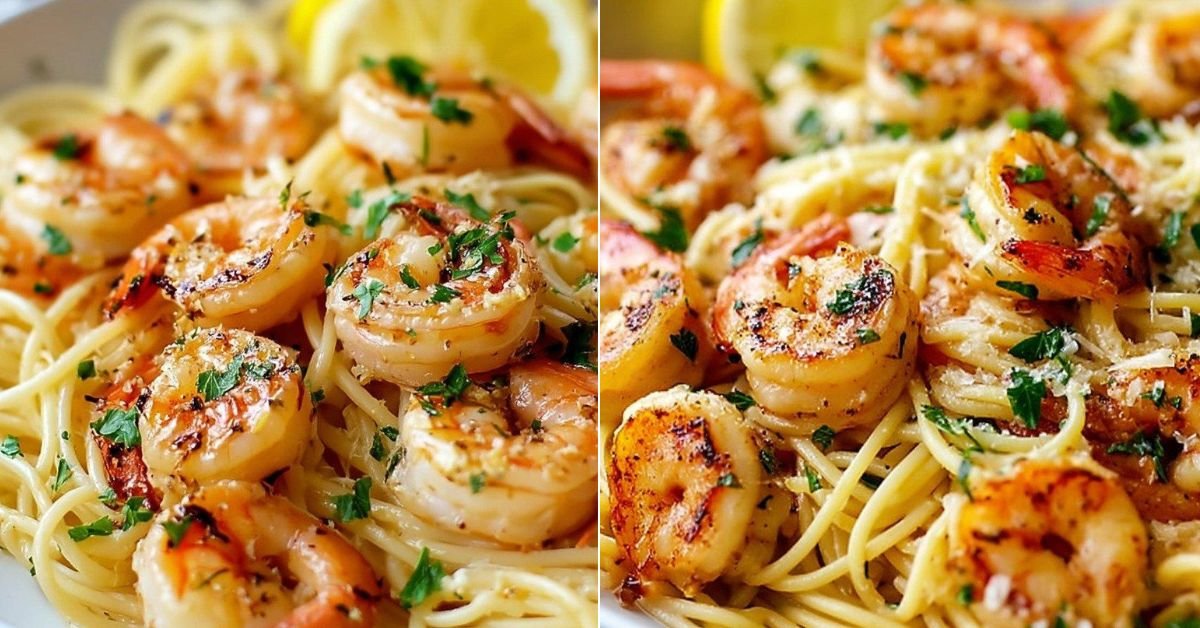
1) What I Learned Testing Garlic Butter Shrimp Pasta
Watery shrimp pasta can make a 30-minute dinner feel flat instead of comforting. I’m Camila, and I tested this garlic butter shrimp pasta after one rushed batch where the shrimp steamed, the garlic tasted sharp, and the sauce slid off the pasta. The discovery was simple but important: dry the shrimp, cook the garlic gently, and use reserved pasta water to pull the butter and lemon into a light coating. That small adjustment turned this easy shrimp pasta into the kind of calm weeknight dinner I reach for when I want something bright, warm, and reliable.
Table of Contents
- 1) What I Learned Testing Garlic Butter Shrimp Pasta
- 2) Key Takeaways
- 3) Easy Garlic Butter Shrimp Pasta – Easy 30-Minute Weeknight Dinner Recipe
- 4) Why Most Garlic Butter Shrimp Pasta – Easy 30-Minute Weeknight Dinner Recipes Fail
- 5) Ingredients for Garlic Butter Shrimp Pasta – Easy 30-Minute Weeknight Dinner
- 6) How to Make Garlic Butter Shrimp Pasta – Easy 30-Minute Weeknight Dinner
- 7) Recipe Card: Garlic Butter Shrimp Pasta – Easy 30-Minute Weeknight Dinner
- 8) Tips for Making Garlic Butter Shrimp Pasta – Easy 30-Minute Weeknight Dinner
- 9) Common Mistakes & Fixes
- 10) How to Tell Garlic Butter Shrimp Pasta Has the Right Texture and Doneness
- 11) Professional Secrets Behind Better Garlic Butter Shrimp Pasta – Easy 30-Minute Weeknight Dinner
- 12) Best Dishes or Pairings to Serve With Garlic Butter Shrimp Pasta – Easy 30-Minute Weeknight Dinner
- 13) Making Garlic Butter Shrimp Pasta – Easy 30-Minute Weeknight Dinner Ahead of Time
- 14) Storing Leftover Garlic Butter Shrimp Pasta – Easy 30-Minute Weeknight Dinner
- 15) FAQ (Real Cooking Questions)
- 16) Save This Garlic Butter Shrimp Pasta – Easy 30-Minute Weeknight Dinner Recipe
- 17) Conclusion
- 18) Nutrition
2) Key Takeaways
- Dry shrimp cook better: Patting shrimp dry helps them sear quickly instead of steaming, which keeps the sauce from turning watery.
- Pasta water is the sauce builder: A small amount of starchy reserved pasta water helps butter, lemon, and garlic cling to the pasta instead of separating.
- Garlic needs gentle heat: Cook minced garlic just until fragrant; browned garlic can taste bitter and overpower the shrimp.
- The final toss matters: Toss the pasta before returning the shrimp so the shrimp stays tender and does not overcook in the skillet.
3) Easy Garlic Butter Shrimp Pasta – Easy 30-Minute Weeknight Dinner Recipe
This garlic butter shrimp pasta works because it treats pasta, shrimp, and sauce as one connected process instead of three separate parts. The pasta needs to stay al dente so it can absorb a little of the garlic butter sauce without going soft. The shrimp need quick heat and a short rest off the pan, because they continue to firm up after cooking. The sauce needs starch from the reserved pasta water so the butter and lemon do not feel greasy or thin.
The goal is not a heavy cream sauce. It is a light, glossy coating with sweet garlic aroma, bright lemon, mild butter richness, and tender shrimp in every forkful. That is why this method fits weeknights: the steps are short, but each one protects texture. Among shrimp pasta recipes easy enough for dinner after a busy day, this one depends less on extra ingredients and more on timing, heat control, and the final toss.
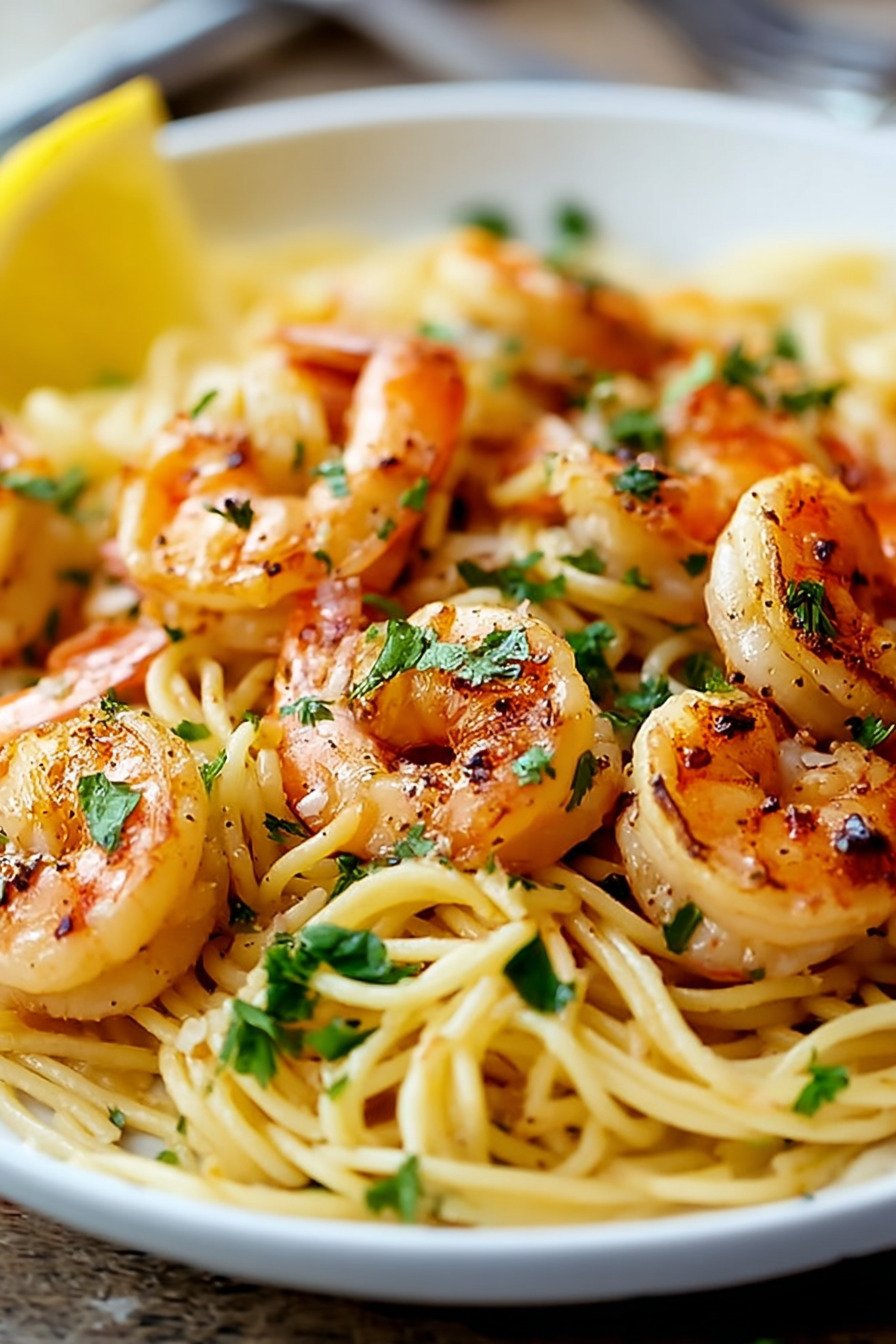
4) Why Most Garlic Butter Shrimp Pasta – Easy 30-Minute Weeknight Dinner Recipes Fail
Most garlic butter shrimp pasta recipes fail when moisture, heat, and timing are not controlled. The first problem is wet shrimp. Shrimp hold surface moisture after peeling and thawing, and when that moisture hits the skillet, it creates steam instead of light browning. The fix is to pat the shrimp dry before seasoning so they cook fast and stay tender.
The second failure is overcooked shrimp. Shrimp are done when they turn pink and opaque, usually after 2 to 3 minutes per side. If they stay in the pan while the sauce is being built, they can become tight and rubbery. Removing them before cooking the garlic protects their texture.
The third failure is harsh or bitter garlic. Minced garlic burns quickly in butter, especially if the skillet is too hot after cooking shrimp. Medium heat and constant stirring keep the garlic fragrant and mellow instead of sharp. The fourth failure is a sauce that breaks or pools at the bottom of the skillet. Reserved pasta water contains starch, which helps the butter, lemon juice, and garlic form a light coating around the pasta.
The fifth failure is under-seasoning. Pasta water should be salted before the noodles cook, then the final dish should be tasted again after the shrimp returns to the pan. Salt added only at the end can taste surface-level, while seasoning in stages gives the garlic shrimp pasta a fuller, more balanced flavor.
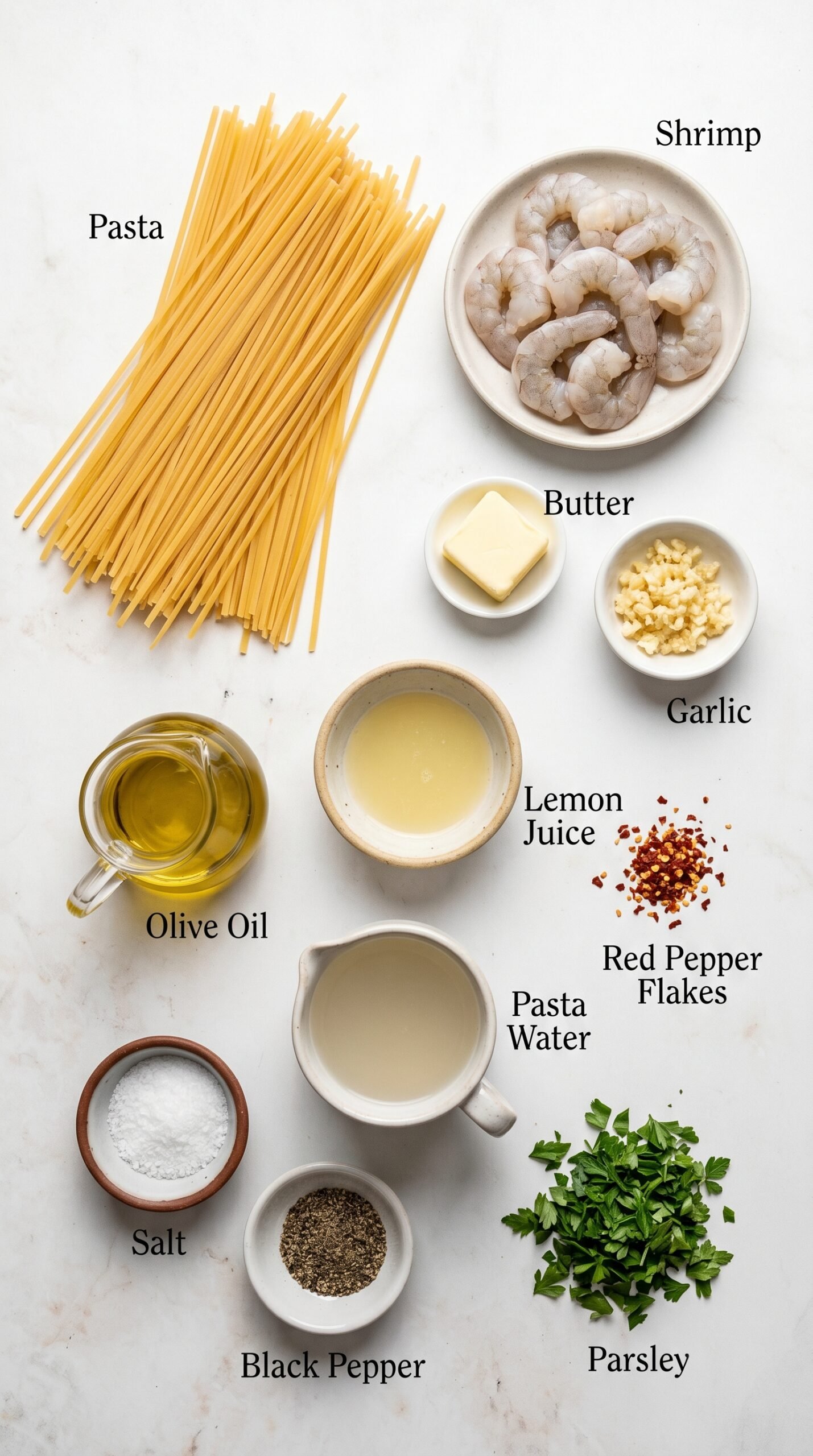
5) Ingredients for Garlic Butter Shrimp Pasta – Easy 30-Minute Weeknight Dinner
Pasta: Pasta gives the sauce structure and turns the shrimp into a full meal. Use it when the water is fully boiling, and cook it al dente so it can handle the final toss. If it is overcooked, the garlic butter sauce can make it feel soft instead of springy.
Shrimp: Peeled and deveined shrimp cook quickly and absorb garlic butter flavor without needing a long marinade. Use them after patting dry and seasoning lightly. If the shrimp are wet, the pan cools down and the sauce can become thin.
Butter: Butter carries the garlic flavor and gives the sauce its rounded finish. Using part of it with the shrimp and the rest with the garlic keeps the dish balanced. If replaced completely with oil, the sauce will taste lighter but less rich.
Garlic: Minced garlic is the main aroma in this garlic butter shrimp pasta. Add it after the shrimp is removed so it cooks gently in the remaining butter. If it browns too much, the flavor turns bitter instead of savory.
Olive oil: Olive oil helps the butter handle skillet heat and keeps the shrimp from sticking. It is used at the beginning of the cooking process. If skipped, the butter may brown too quickly before the shrimp is cooked.
Lemon juice: Lemon juice cuts through the butter and wakes up the shrimp flavor. Add it after the garlic becomes fragrant. Too much lemon can make the sauce taste sharp, while too little can leave the pasta tasting flat.
Red pepper flakes: Red pepper flakes are optional, but they add a gentle background heat. Add them with the lemon juice so they bloom lightly in the butter. If you prefer a milder garlic butter shrimp dish, leave them out.
Reserved pasta water: Pasta water is the small step that changes the sauce. Its starch helps the butter and lemon cling to the pasta. Plain water can loosen the sauce, but it will not bind it as well.
Salt and black pepper: Salt seasons the pasta water, the shrimp, and the final sauce. Black pepper adds warmth without overpowering the garlic. If seasoning is added only at the end, the pasta can taste bland inside.
Parsley: Parsley is optional, but it gives the final dish freshness and color. Add it at the end so it stays bright. If cooked too long, it loses its clean flavor.
- Long pasta vs short pasta: Long pasta gives a classic twirl with the garlic butter sauce, while short pasta holds small pockets of butter, garlic, and shrimp juices.
- Fresh shrimp vs frozen shrimp: Both can work, but thawed frozen shrimp must be dried carefully so the skillet does not fill with liquid.
- Butter only vs butter with olive oil: Butter gives flavor, while olive oil helps manage heat and reduces the risk of scorching.
- Lemon juice vs no lemon juice: Lemon brings lift and balance; without it, the sauce tastes richer but less bright.
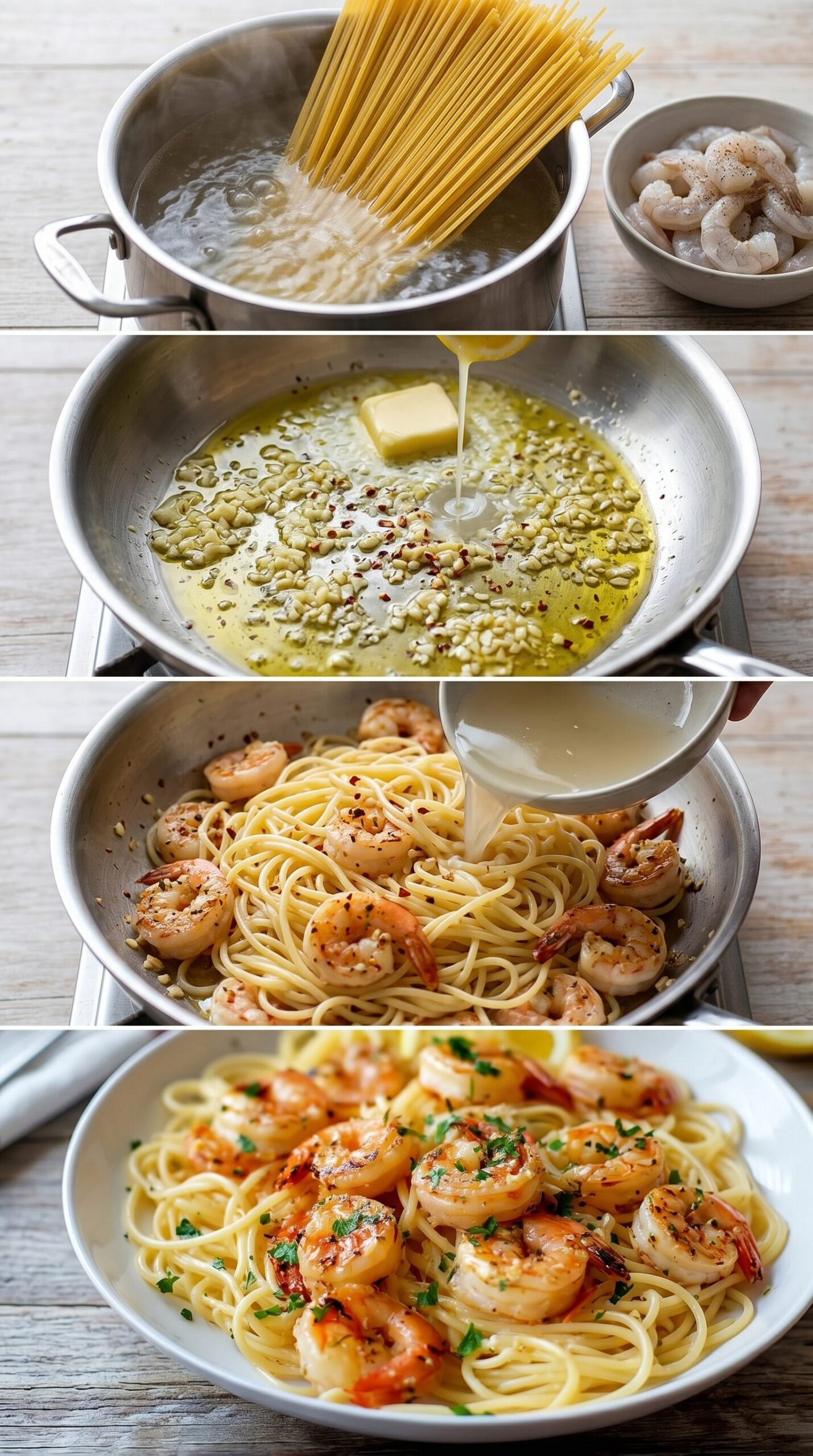
6) How to Make Garlic Butter Shrimp Pasta – Easy 30-Minute Weeknight Dinner
Step 1: Start with a large pot of boiling, well-salted water. The pasta should have room to move so it cooks evenly, and the salt should season the noodles before they ever touch the skillet.
Step 2: Cook the pasta until al dente, then reserve a small amount of pasta water before draining. This water is not just for thinning; it is the starch that helps the garlic butter sauce cling.
Step 3: Pat the shrimp dry and season lightly with salt and pepper. This is the step most cooks rush, but dry shrimp cook faster, taste cleaner, and prevent a watery skillet.
Step 4: Heat olive oil with part of the butter over medium heat. The butter should melt and foam gently, not smoke. Add the shrimp and cook until pink and opaque, then remove them before they tighten.
Step 5: Add the remaining butter and minced garlic to the same skillet. Stir for about 1 minute, watching for aroma instead of deep color. Fragrant garlic is the signal to move forward.
Step 6: Stir in the optional red pepper flakes and lemon juice. The lemon should brighten the pan without overwhelming the butter. Add the reserved pasta water and stir until the sauce looks lightly glossy.
Step 7: Toss in the cooked pasta until coated. Return the shrimp only at the end and toss gently so the shrimp warms through without overcooking. Taste, adjust with salt and pepper, then finish with parsley if using.
7) Recipe Card: Garlic Butter Shrimp Pasta – Easy 30-Minute Weeknight Dinner
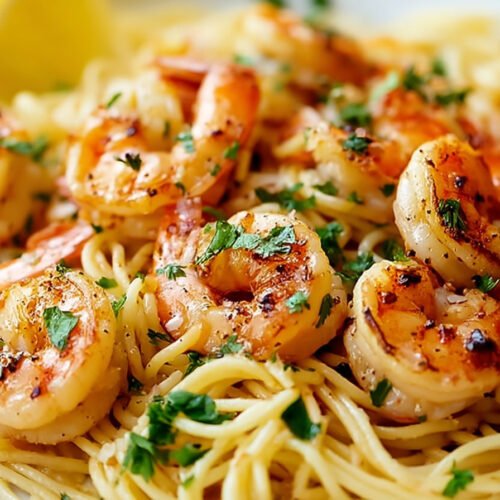
Garlic Butter Shrimp Pasta – Easy 30-Minute Weeknight Dinner
Ingredients
- 12 ounces pasta, cooked al dente so it can finish in the garlic butter sauce without turning soft
- 1 pound shrimp, peeled and deveined, patted very dry for better searing
- 3 tablespoons butter, divided so the shrimp cooks gently and the sauce stays glossy
- 3 cloves garlic, minced finely so it perfumes the butter quickly
- 1 tablespoon olive oil, used with butter to help prevent scorching
- 1 tablespoon lemon juice, added for brightness and balance
- 1/4 teaspoon red pepper flakes, optional, for gentle heat
- 1/4 cup reserved pasta water, saved before draining to help emulsify the sauce
- Salt and black pepper to taste, added in layers for better seasoning
- 2 tablespoons chopped parsley, optional, for a fresh finish
Instructions
- Bring a large pot of water to a rolling boil and season it generously with salt so the pasta has flavor before it reaches the sauce.
- Cook the pasta according to package directions until al dente. Reserve 1/4 cup of the starchy pasta water, then drain the pasta and set it aside.
- Pat the shrimp dry with paper towels and season lightly with salt and black pepper. Removing surface moisture helps the shrimp cook quickly instead of steaming.
- Heat the olive oil and 1 tablespoon of the butter in a large skillet over medium heat until the butter melts and begins to foam lightly.
- Add the shrimp in an even layer and cook for 2–3 minutes per side, just until pink, opaque, and curled into a loose C shape. Remove the shrimp from the pan and set aside so it does not overcook.
- In the same skillet, add the remaining butter and minced garlic. Cook for about 1 minute, stirring often, until fragrant but not browned.
- Add the red pepper flakes, if using, and the lemon juice, stirring to lift the garlic flavor into the butter.
- Pour in the reserved pasta water and stir until the sauce looks lightly glossy and loosened.
- Add the cooked pasta to the skillet and toss well so the starch, butter, lemon, and garlic coat every strand or piece.
- Return the shrimp to the pan and toss gently just until warmed through and combined with the pasta.
- Taste the pasta and adjust with additional salt and black pepper if needed, keeping the lemon and garlic balanced.
- Sprinkle with chopped parsley, if using, and serve immediately while the sauce is silky and the shrimp is tender.
8) Tips for Making Garlic Butter Shrimp Pasta – Easy 30-Minute Weeknight Dinner
Use a wide skillet so the shrimp can sit in one layer. Crowding traps steam, and steam is the enemy of quick seafood cooking. If your skillet is small, cook the shrimp in two batches rather than piling them up.
Keep the heat at medium once the butter and garlic are in the pan. High heat can make garlic taste bitter before the butter has time to become aromatic. The smell should be savory and warm, not toasted or burnt.
Do not rinse the pasta after draining. The surface starch helps the sauce hold on. Rinsing removes that starch and makes the sauce more likely to slide off, especially in shrimp pasta recipes easy garlic butter style where the sauce is light.
Add pasta water gradually if the skillet looks dry. A tablespoon or two can loosen the sauce without drowning it. The finished pasta should look coated and shiny, not soupy.
Return the shrimp at the last possible moment. Shrimp finish cooking quickly, and the residual heat from the pasta is enough to warm them through. This keeps the texture tender instead of bouncy or rubbery.
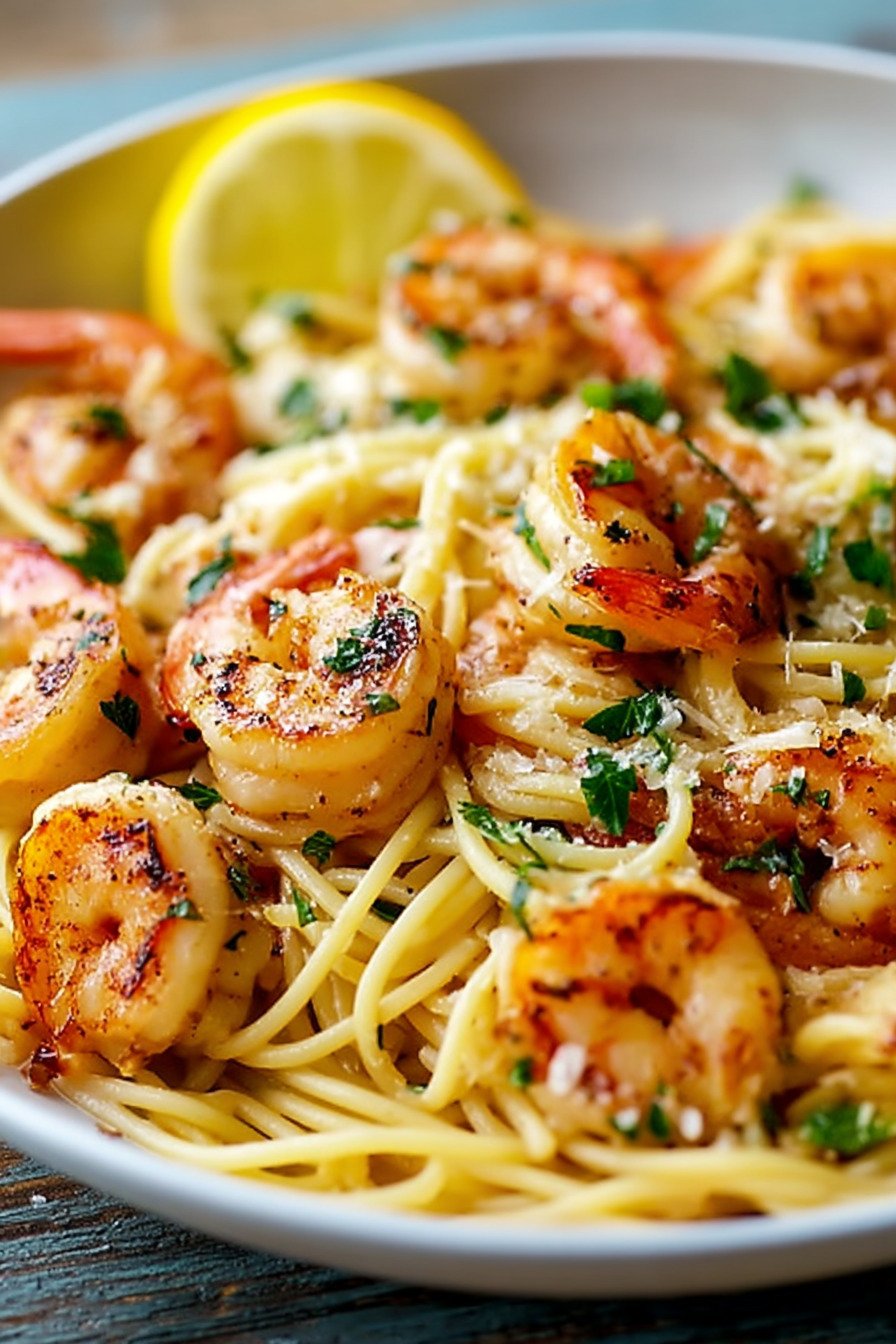
9) Common Mistakes & Fixes
Problem: The sauce is watery. Cause: The shrimp were wet, the pasta was over-drained without reserved water control, or the skillet was crowded. Fix: Dry the shrimp well, cook in a single layer, and use pasta water gradually while tossing.
Problem: The shrimp are rubbery. Cause: Shrimp were cooked too long or left in the pan while the garlic sauce was built. Fix: Remove shrimp as soon as they are pink and opaque, then return them only for the final toss.
Problem: The garlic tastes bitter. Cause: The skillet was too hot or the garlic browned too deeply. Fix: Lower the heat to medium and cook garlic only until fragrant, about 1 minute.
Problem: The pasta tastes bland. Cause: The cooking water was not salted enough or the final seasoning was skipped. Fix: Salt the pasta water generously and taste again after the pasta and shrimp are combined.
Problem: The sauce feels greasy. Cause: The butter did not emulsify with enough starchy pasta water. Fix: Add reserved pasta water and toss over medium heat until the sauce looks smooth and lightly glossy.
10) How to Tell Garlic Butter Shrimp Pasta Has the Right Texture and Doneness
The pasta should be al dente, which means tender but still slightly firm in the center. When tossed in the skillet, it should bend easily without breaking down or turning mushy. The sauce should cling in a thin, shiny layer, with no puddle of liquid at the bottom of the pan.
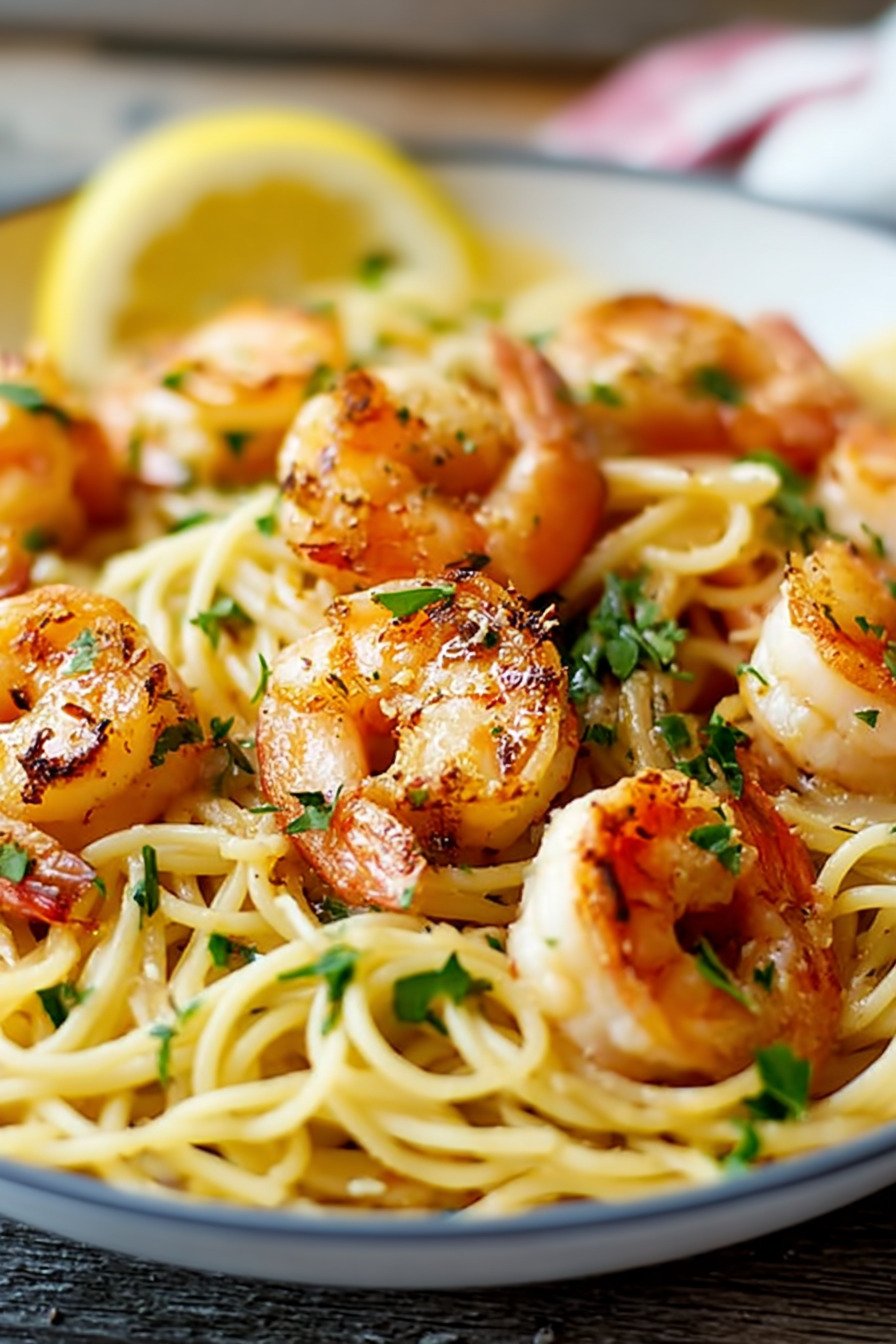
The shrimp should be pink, opaque, and curled into a loose C shape. If shrimp curl tightly into small rounds, they have likely cooked too long. The texture should feel tender with a gentle snap, not dry or rubbery.
The aroma should be buttery, garlicky, and lightly bright from lemon. If the garlic smells burnt or harsh, the sauce will taste bitter. The flavor should be balanced: savory butter first, garlic second, lemon brightness at the end, and enough salt and pepper to bring the shrimp forward.
11) Professional Secrets Behind Better Garlic Butter Shrimp Pasta – Easy 30-Minute Weeknight Dinner
The first professional secret is timing the shrimp separately from the sauce. In a restaurant-style pasta station, seafood is rarely left sitting in a hot pan while everything else finishes. Cooking the shrimp, removing it, and returning it at the end protects tenderness.
The second secret is treating pasta water like an ingredient. Starchy water carries body, salt, and binding power. In this garlic shrimp pasta, it turns butter and lemon juice into a light sauce instead of a separated coating.
The third secret is using aroma cues instead of relying only on the clock. Garlic is ready when the sharp raw smell softens into a warm, savory fragrance. Shrimp are ready when they turn opaque. Pasta is ready when it can finish in the sauce without collapsing. These small cues make the recipe more dependable than a timer alone.
12) Best Dishes or Pairings to Serve With Garlic Butter Shrimp Pasta – Easy 30-Minute Weeknight Dinner
Serve garlic butter shrimp pasta with a crisp green salad when you want contrast against the buttery sauce. A lemony arugula salad, cucumber salad, or simple romaine salad works especially well because the freshness balances the shrimp and pasta.
For a warmer dinner plate, pair it with roasted asparagus, sautéed zucchini, or green beans. These vegetables cook quickly and do not compete with the garlic butter flavor. Garlic bread can also work, but keep the portion modest because the pasta already brings butter, garlic, and starch.
If serving this for a family dinner, add a simple tomato salad or steamed broccoli to keep the meal bright. For a slightly richer comfort-food style, a small bowl of soup before the pasta can make the meal feel more complete without changing the recipe itself.
13) Making Garlic Butter Shrimp Pasta – Easy 30-Minute Weeknight Dinner Ahead of Time
This recipe tastes best right after tossing, but you can prepare several parts ahead. Peel and devein the shrimp, mince the garlic, chop the parsley, and measure the butter, lemon juice, and red pepper flakes before cooking. Keep the shrimp cold and dry until it is time to cook.
Avoid fully cooking the pasta and shrimp too far ahead if you want the freshest texture. Pasta continues to absorb moisture as it sits, and shrimp can firm up when reheated. For the best make-ahead strategy, prep the ingredients early and cook the dish fresh in the final 30 minutes.
14) Storing Leftover Garlic Butter Shrimp Pasta – Easy 30-Minute Weeknight Dinner
Store leftover garlic butter shrimp pasta in an airtight container in the refrigerator for up to 2 days. Because shrimp are delicate, avoid repeated reheating. Warm leftovers gently in a skillet over low heat with a small splash of water to loosen the sauce.
Freezing is not ideal for this dish. Cooked shrimp can become firm after thawing, and pasta may soften as it releases moisture. If you do freeze leftovers, expect a softer texture and reheat slowly rather than aggressively.
Leftovers can be refreshed with a squeeze of lemon, a small pat of butter, or a little chopped parsley. Avoid adding too much liquid at once; the goal is to revive the sauce, not turn it into broth.
15) FAQ (Real Cooking Questions)
Can I use frozen shrimp for garlic butter shrimp pasta? Yes, but thaw it fully and pat it very dry before cooking. Frozen shrimp often releases extra moisture, and that moisture can weaken the sauce if it goes straight into the skillet.
What pasta shape works best? Spaghetti, linguine, penne, spirals, or similar pasta shapes all work. Long pasta gives a classic garlic butter coating, while short pasta catches small bits of garlic, lemon, and parsley.
Can I make this less spicy? Yes. The red pepper flakes are optional, so leave them out for a milder dish. The garlic, butter, lemon, and shrimp still provide enough flavor without heat.
Why does my garlic butter sauce separate? It usually needs more starchy pasta water and more tossing. Add a little reserved pasta water and toss over medium heat until the sauce looks smooth and lightly glossy.
How do I keep shrimp from getting tough? Cook shrimp only until pink and opaque, then remove it from the skillet while the sauce is made. Return it at the end just long enough to warm through.
Is this a good option for shrimp pasta recipes easy enough for beginners? Yes, because the cues are visible: al dente pasta, fragrant garlic, glossy sauce, and shrimp that are pink and opaque. The most important beginner habit is not walking away from the skillet.
16) Save This Garlic Butter Shrimp Pasta – Easy 30-Minute Weeknight Dinner Recipe
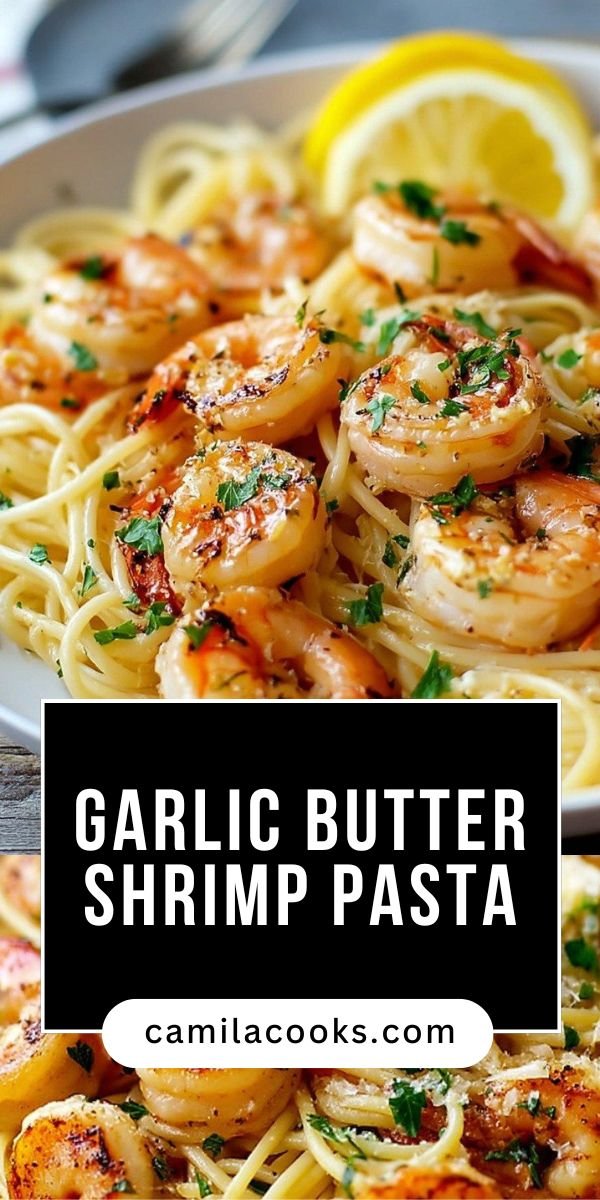
If this garlic butter shrimp pasta helped you solve watery sauce or rubbery shrimp, save it for your next weeknight dinner. The key reminder is: dry the shrimp, save the pasta water, and return the shrimp only at the end.
17) Conclusion
Garlic butter shrimp pasta becomes much more reliable when you understand what each step is protecting. Dry shrimp prevent a watery pan. Medium heat protects the garlic. Pasta water builds the sauce. A gentle final toss keeps the shrimp tender. Once those details click, this recipe stops feeling like a quick dinner that might go wrong and starts feeling like a controlled, confident skillet meal with bright lemon, savory butter, and pasta that actually holds its sauce.
18) Nutrition
Serving Size 1 portion Calories 485 Sugar 2 g Sodium 620 mg Fat 17 g Saturated Fat 8 g Carbohydrates 52 g Fiber 3 g Protein 31 g Cholesterol 205 mg

Leave a Comment