
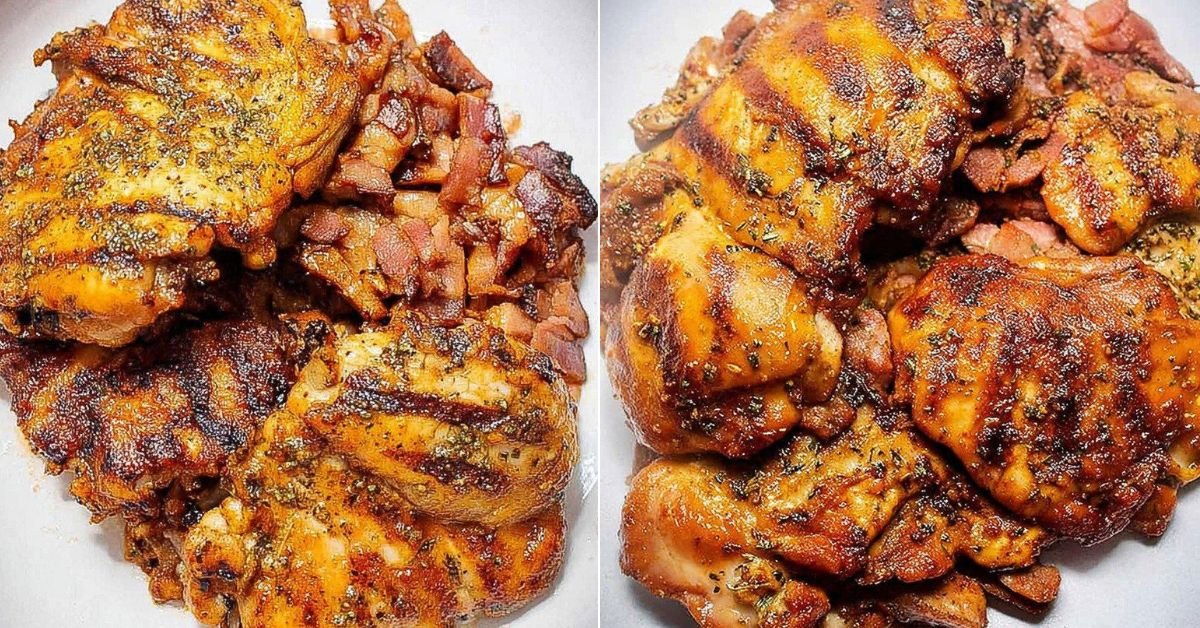
1) What I Learned Testing Smoked Boneless Skinless Chicken Thighs on Pellet Grill
Dry smoked chicken is usually not a seasoning problem; it is a timing and temperature problem. I’m Camila, and my early batches came off the grill smoky but a little tight because I trusted the clock more than the thermometer. After testing the rub coverage, flipping point, and resting time, I discovered that smoked boneless chicken thighs stay juicier when every side is coated and the probe sits in the thickest part. This method brings that calm Sunday-dinner feeling to boneless chicken thighs on pellet grill nights, with savory smoke, gentle sweetness, and no guessing.
Table of Contents
- 1) What I Learned Testing Smoked Boneless Skinless Chicken Thighs on Pellet Grill
- 2) Key Takeaways
- 3) Easy Smoked Boneless Skinless Chicken Thighs on Pellet Grill Recipe
- 4) Why Most Smoked Boneless Skinless Chicken Thighs on Pellet Grill Recipes Fail
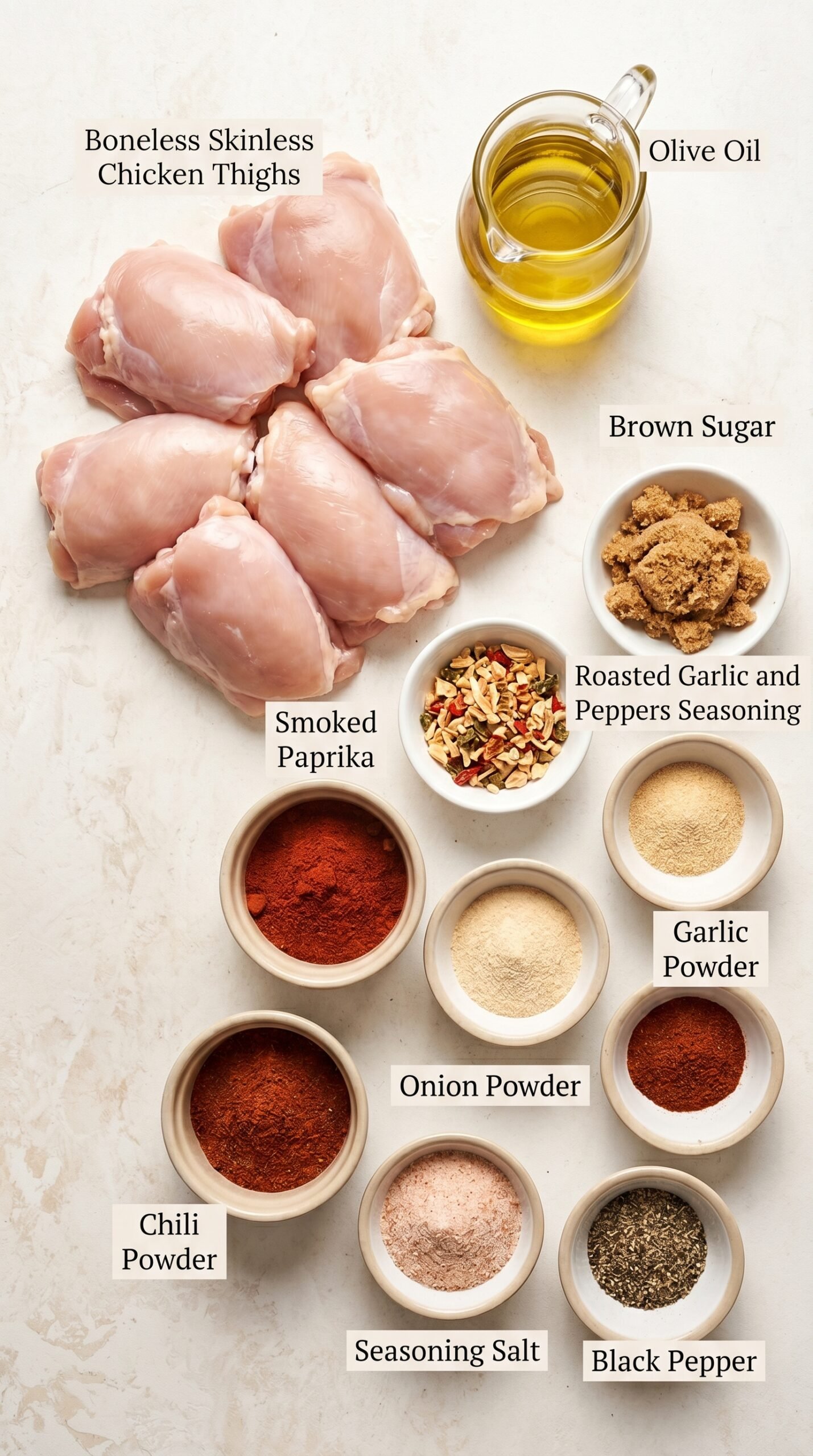
- 5) Ingredients for Smoked Boneless Skinless Chicken Thighs on Pellet Grill
- 6) How to Make Smoked Boneless Skinless Chicken Thighs on Pellet Grill
- 7) Recipe Card: Smoked Boneless Skinless Chicken Thighs on Pellet Grill
- 8) Tips for Making Smoked Boneless Skinless Chicken Thighs on Pellet Grill
- 9) Common Mistakes & Fixes
- 10) How to Tell Smoked Boneless Chicken Thighs Are Done
- 11) Professional Secrets Behind Better Smoked Boneless Chicken Thighs
- 12) Best Dishes or Pairings to Serve With Smoked Boneless Chicken Thighs
- 13) Making Smoked Boneless Chicken Thighs Ahead of Time
- 14) Storing Leftover Smoked Boneless Chicken Thighs
- 15) FAQ (Real Cooking Questions)
- 16) Save This Smoked Boneless Chicken Thighs Recipe
- 17) Conclusion
- 18) Nutrition
2) Key Takeaways
- Use the thermometer, not just the timer: Boneless thighs can vary in thickness, so 165°F in the thickest part is the reliable doneness point.
- Season every surface: The rub needs to cover the top, bottom, sides, and folded edges so the chicken tastes seasoned all the way through.
- Keep the smoker steady: A 225°F pellet grill gives the chicken time to absorb smoke without cooking too aggressively.
- Rest before slicing: A 5 to 10 minute rest helps the juices settle, which keeps the chicken tender instead of leaky and dry.
3) Easy Smoked Boneless Skinless Chicken Thighs on Pellet Grill Recipe
Smoked boneless chicken thighs are one of the most forgiving chicken thigh smoker recipes, but they still need careful handling. Because the thighs are boneless and skinless, there is no skin to protect the surface and no bone to slow down the cook. That means the seasoning, smoker temperature, thermometer placement, and resting time do the heavy lifting.
The goal is chicken that tastes smoky, savory, slightly sweet from the brown sugar rub, and juicy through the center. The olive oil helps the dry rub cling instead of falling onto the grates, while garlic powder, paprika, onion powder, chili powder, seasoning salt, and black pepper build a balanced crust. The method is simple, but the details matter: preheat fully, place the probe correctly, flip once, and pull the chicken when it reaches the safe internal temperature.
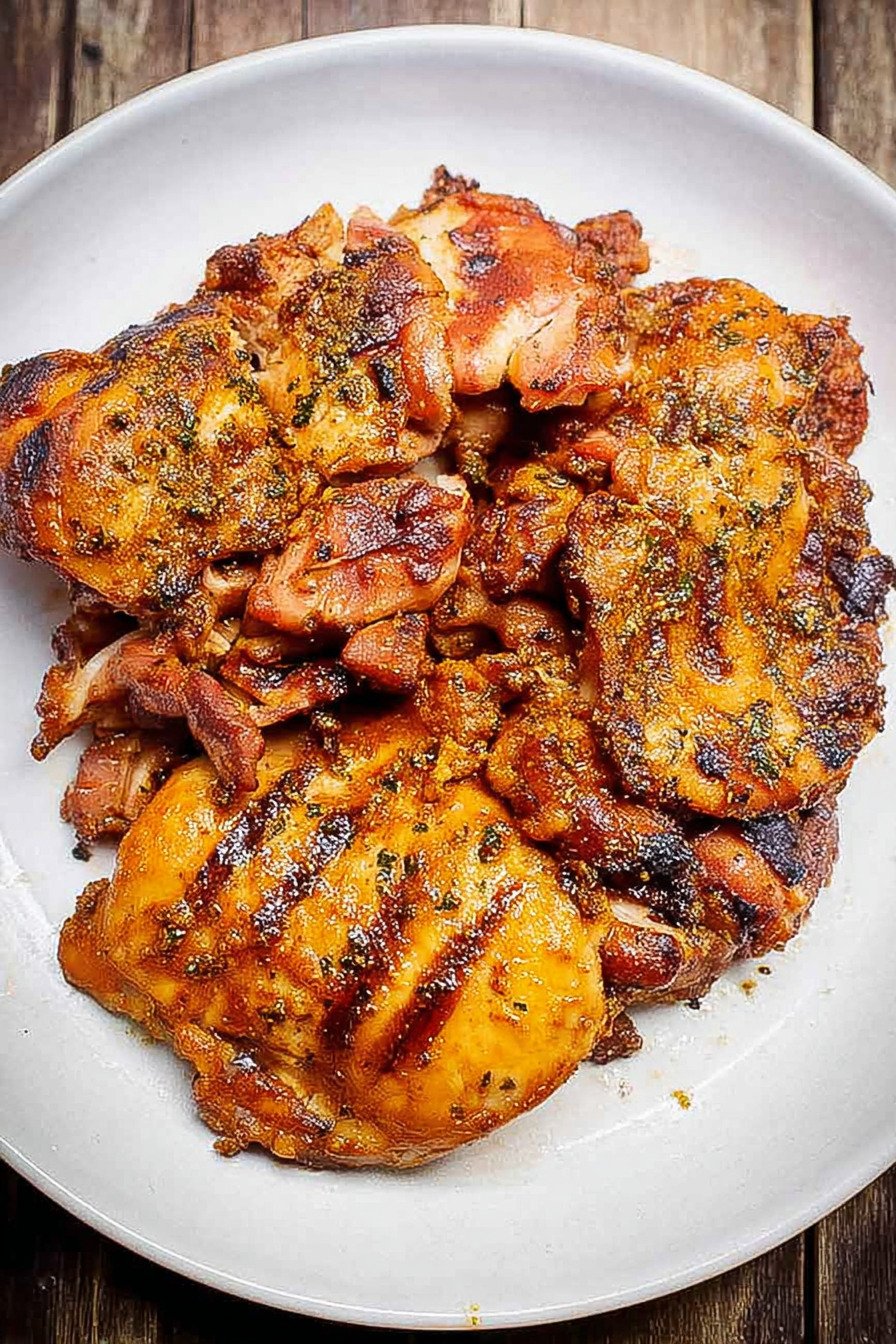
4) Why Most Smoked Boneless Skinless Chicken Thighs on Pellet Grill Recipes Fail
Most smoked boneless chicken thighs fail because the cook treats boneless thighs like bone-in chicken or like chicken breasts. Boneless thighs cook faster than bone-in pieces, and their thinner edges can dry out if the grill runs hot or the probe is placed incorrectly. A steady 225°F smoker gives the meat time to take on flavor without tightening too quickly.
Another common failure is uneven seasoning. If the dry rub only lands on the top, the underside and tucked edges taste flat. Coating every side matters because these thighs are turned during cooking, and every surface spends time exposed to smoke and heat. If a bite tastes smoky but bland, the issue usually started before the chicken hit the grill.
Dryness is the next problem. It often comes from cooking past 165°F because the cook is waiting for a darker color instead of checking temperature. Smoke color can vary depending on pellets, rub, humidity, and grill design, so color alone is not a reliable doneness test. The thermometer should slide horizontally into the thickest part of the thigh, not down through a thin edge.
Finally, skipping the rest can undo good cooking. When chicken comes off the grill, the juices are still moving. A short foil-covered rest gives the meat time to relax, making each piece easier to slice and more pleasant to eat. That small pause is often the difference between juicy smoked boneless chicken and chicken that leaks onto the plate.
5) Ingredients for Smoked Boneless Skinless Chicken Thighs on Pellet Grill
Boneless, skinless chicken thighs: These are the center of the recipe. Thigh meat has more natural richness than chicken breast, which helps it stay moist during smoking. Use them after trimming large pockets of excess fat so the rub can sit directly on the meat and the pieces cook evenly.
Olive oil: The oil works as a binder. It helps the dry rub cling to the chicken and keeps the surface from looking dusty. If you skip it, the seasoning may fall off in patches when the chicken is moved or flipped.
Dry chicken rub: The rub gives these smoked boneless chicken thighs their sweet, savory, smoky flavor. Only part of the homemade rub is needed for the chicken, so the extra can be saved for another batch of chicken or pork.
Brown sugar: Brown sugar adds sweetness and helps the surface develop a deeper color. It should be mixed thoroughly with the spices so the rub does not clump or create overly sweet patches.
Roasted Garlic and Peppers Seasoning: This adds a rounded garlic-pepper flavor that works well with smoke. A similar garlic-pepper seasoning can work, but check the salt level before adding extra seasoning elsewhere.
Garlic powder: Garlic powder gives steady savory flavor without the risk of fresh garlic scorching on the smoker. It works especially well in dry rubs because it spreads evenly across the chicken.
Smoked paprika or paprika: Smoked paprika deepens the smoky aroma, while regular paprika gives color and mild earthiness. If your pellets are strongly flavored, regular paprika can keep the rub from tasting too smoky.
Onion powder: Onion powder fills in the background flavor and makes the rub taste more complete. It blends smoothly with garlic powder and chili powder.
Chili powder: Chili powder adds warmth and depth without turning the chicken overly spicy. It helps the rub taste layered instead of simply sweet.
Seasoning salt: This seasons the chicken and helps the savory flavors stand out. Because seasoning blends vary, avoid adding extra salt until you know how salty your blend tastes.
Black pepper: Black pepper gives a sharper finish and balances the brown sugar. Freshly ground pepper adds the cleanest bite, but regular ground pepper still works.
- Boneless thighs vs bone-in thighs: Boneless thighs cook faster and need accurate thermometer placement because there is no bone to slow heat transfer.
- Olive oil binder vs dry rub alone: Oil helps the rub stay attached, while dry rub alone can fall away during flipping.
- Smoked paprika vs regular paprika: Smoked paprika adds extra woodsy flavor, while regular paprika keeps the flavor milder and more balanced.
- BBQ sauce at the end vs early sauce: Sauce added near the end warms and turns glossy; sauce added too early can darken too much because of its sugars.
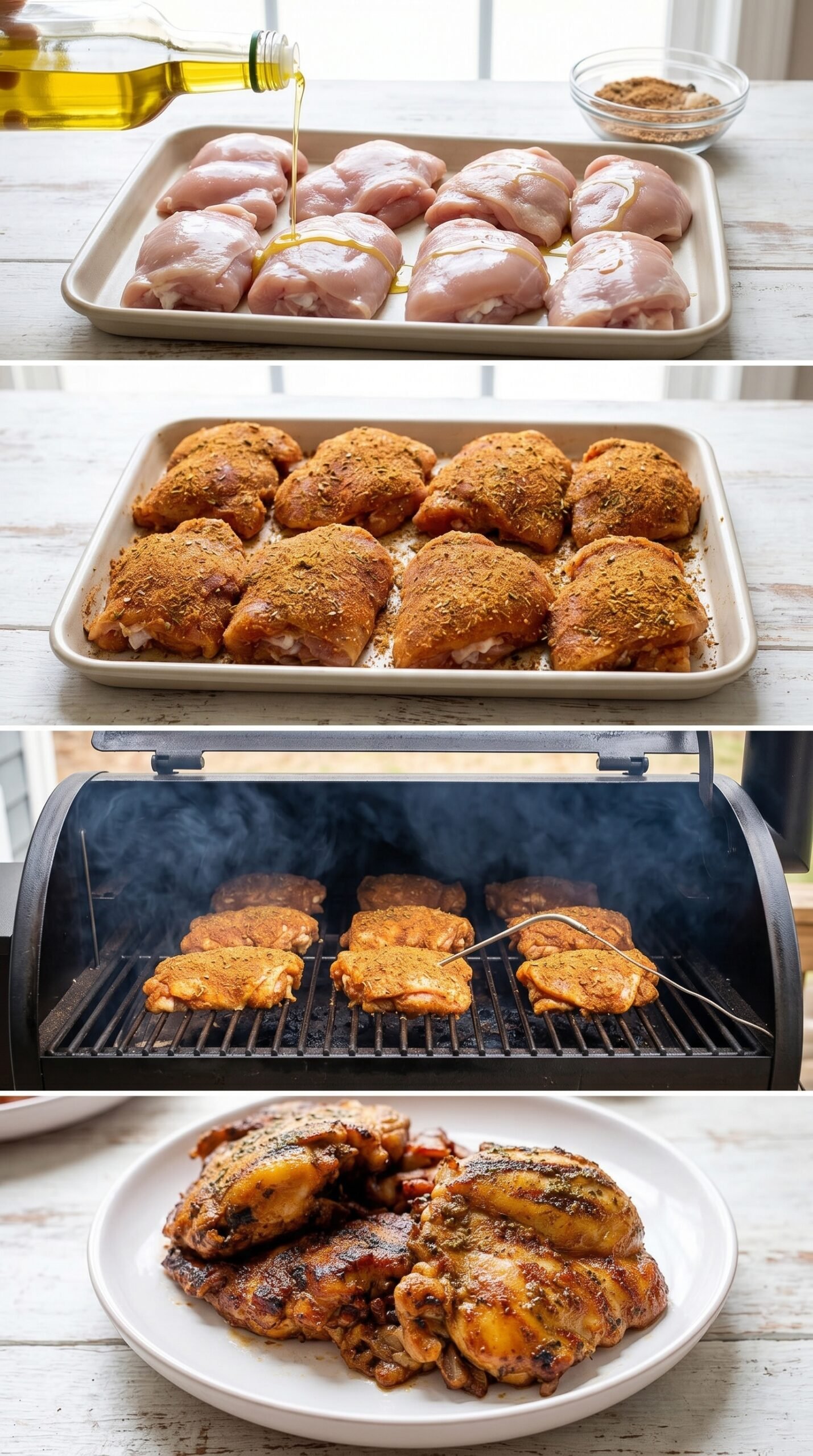
6) How to Make Smoked Boneless Skinless Chicken Thighs on Pellet Grill
Step 1: Preheat the smoker to 225°F and make sure the pellet hopper is topped up. Starting with a stable smoker matters because chicken thighs begin absorbing heat as soon as they hit the grates.
Step 2: Trim the chicken thighs and coat them with olive oil. Remove large pieces of excess fat, but do not shave the thighs completely bare. A little natural richness helps the chicken stay juicy while it smokes.
Step 3: Mix the dry rub ingredients until the brown sugar and spices look evenly combined. Break up any sugar clumps so the rub seasons consistently instead of creating sweet or salty spots.
Step 4: Apply the dry rub over the top, bottom, sides, and folded edges of the chicken. This is where many smoked boneless chicken recipes go wrong; the underside needs just as much attention as the top.
Step 5: Place the chicken directly on the preheated grill grates and insert the thermometer probe horizontally into the thickest part. The probe tip should sit in the center of the meat, not near a thin edge.
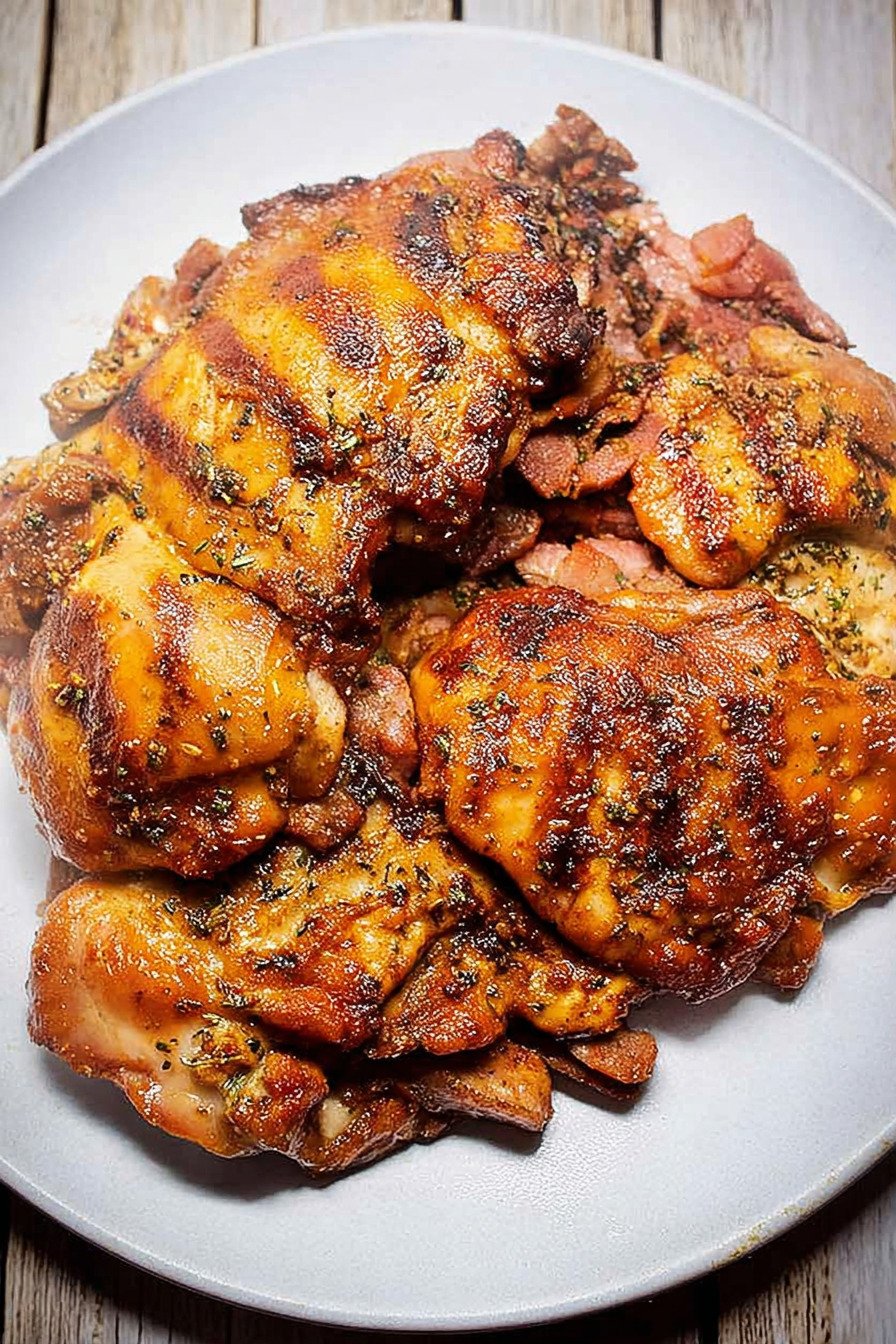
Step 6: Smoke for 30 minutes, flip with tongs, then continue smoking for about 45 minutes more. The target is 165°F internal temperature, with a surface that looks set, slightly darkened, and moist rather than dry.
Step 7: Brush with BBQ sauce only during the last few minutes if you want a saucy finish. Adding it late keeps the sugars from burning and lets the smoky rub remain the main flavor.
Step 8: Transfer the chicken to a serving tray, cover loosely with foil, and rest for 5 to 10 minutes. Serve warm with sides that can soak up the smoky juices.
7) Recipe Card: Smoked Boneless Skinless Chicken Thighs on Pellet Grill
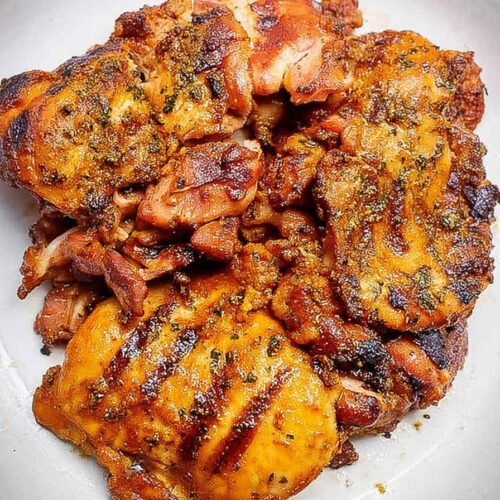
Smoked Boneless Skinless Chicken Thighs on Pellet Grill
Ingredients
- 8 pieces chicken thighs boneless, skinless, trimmed of excess fat for even cooking
- 2 tablespoons olive oil, used to help the rub cling and protect the surface from drying
- 2 tablespoons dry chicken rub, using the mixture below and saving the extra for another batch of chicken or pork
Homemade Dry Chicken Rub
- ¼ cup brown sugar, packed lightly for sweetness and better surface color
- 2 tablespoons Roasted Garlic and Peppers Seasoning, or a similar garlic-pepper seasoning blend
- 2 tablespoons garlic powder, for a savory base that holds up to smoke
- 2 teaspoons smoked paprika or paprika, for color and gentle smoky depth
- 2 teaspoons onion powder, to round out the dry rub
- 2 teaspoons chili powder, for mild warmth and deeper flavor
- 1 teaspoon seasoning salt, to season the chicken evenly
- ½ teaspoon black pepper, freshly ground if possible for a sharper finish
Instructions
- Preheat the smoker to 225°F and make sure the hopper is topped up with wood pellets before the chicken goes on. A steady low temperature helps the thighs absorb smoke without tightening too quickly.
- Trim any large pieces of excess fat from the boneless, skinless chicken thighs. Drizzle the chicken all over with the olive oil, rubbing it across the top, bottom, and sides so the seasoning can stick evenly.
- Combine the brown sugar, Roasted Garlic and Peppers Seasoning, garlic powder, smoked paprika, onion powder, chili powder, seasoning salt, and black pepper in a small bowl or jar. Stir or shake until the rub looks evenly blended with no clumps of brown sugar.
- Sprinkle 2 tablespoons of the dry chicken rub over the chicken thighs, then massage it over every surface. Coat the top, bottom, edges, and any folded areas so each piece seasons evenly while it smokes.
- When the smoker reaches 225°F, place the chicken thighs directly on the preheated grill grates. Insert a thermometer probe horizontally through the side of a thigh into the thickest part of the meat, avoiding thin edges that can give a false reading.
- Close the lid and smoke for 30 minutes. Flip the thighs with tongs, close the lid again, and continue smoking for about 45 minutes more, or until the internal temperature reaches 165°F. The chicken should look set, lightly darkened, and juicy when pierced.
- If using BBQ sauce, brush it on during the last few minutes of cooking so it warms and lightly tacks onto the surface without burning.
- Remove the smoked chicken thighs from the grill and transfer them to a serving tray. Cover loosely with aluminum foil and rest for 5 to 10 minutes so the juices settle back into the meat.
- Serve the thighs warm with your favorite side dishes, slicing only after resting so the texture stays tender and moist.
8) Tips for Making Smoked Boneless Skinless Chicken Thighs on Pellet Grill
Keep the chicken pieces close in size when possible. If one thigh is much smaller than the others, it may reach 165°F early and should be checked separately. Boneless chicken thighs on pellet grill setups can cook unevenly when pieces are folded or bunched, so spread each thigh out naturally on the grate.
Use the dry rub with restraint. The homemade rub makes more than the recipe needs, and using too much can make the surface overly sweet or salty. A confident coating is enough; the chicken should be covered, not buried.
Do not chase dark color by raising the heat too early. A pellet grill’s smoke, pellets, airflow, and rub composition all affect the final color. If the internal temperature is right and the surface is set, the chicken is ready to rest.
For a stronger smoke profile, use a pellet flavor that pairs well with chicken, such as apple, cherry, pecan, or hickory. Fruit woods keep the flavor softer, while hickory gives the smoked boneless chicken a bolder backyard-style edge.
9) Common Mistakes & Fixes
Problem: The chicken tastes dry. Cause: It likely cooked past 165°F or rested too briefly. Fix: Place the probe in the thickest part, pull the thighs at temperature, and rest them under loose foil before slicing.
Problem: The chicken tastes bland underneath. Cause: The rub was only applied to the top. Fix: Rub every side of each thigh, including the bottom and tucked edges, before the chicken goes on the smoker.
Problem: The BBQ sauce tastes burnt. Cause: Sauce was added too early and the sugars darkened too much. Fix: Brush sauce on only during the last few minutes of cooking so it warms and sets without scorching.
Problem: The rub clumps in sweet spots. Cause: Brown sugar was not mixed thoroughly with the spices. Fix: Stir or shake the rub until it looks even before applying it to the oiled chicken.
Problem: The temperature reading seems wrong. Cause: The thermometer probe may be in a thin edge or angled too close to the surface. Fix: Insert the probe horizontally through the side into the thickest center portion.
10) How to Tell Smoked Boneless Chicken Thighs Are Done
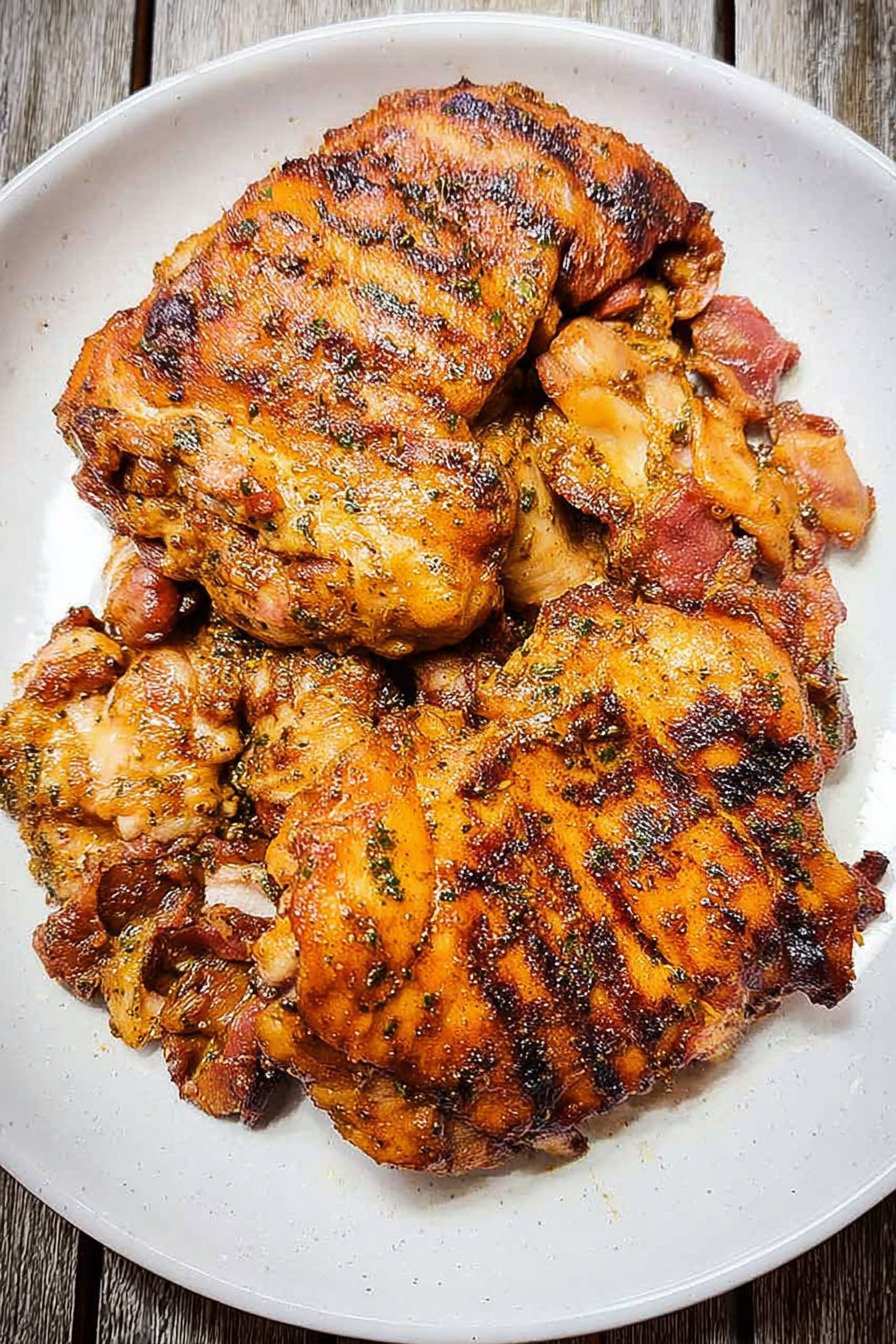
Smoked boneless chicken thighs are done when the thickest part reaches 165°F and the meat feels springy, not soft or rubbery. The outside should look lightly darkened from the rub, with a moist surface and gentle smoky aroma. If BBQ sauce is used, it should look glossy and lightly set, not burnt or sticky in a hard layer.
The texture should be juicy and tender when sliced. The meat should not look translucent, and the juices should not run aggressively across the cutting board after resting. If the chicken pulls into dry strings or has tough edges, it was likely cooked too long or exposed to higher heat than intended.
Flavor is another useful signal. The first bite should taste savory, smoky, gently sweet, and well-seasoned through the surface. If the chicken tastes smoky but flat, the rub coverage was too light. If it tastes harsh or overly salty, too much rub may have been used for the amount of chicken.
11) Professional Secrets Behind Better Smoked Boneless Chicken Thighs
The biggest professional habit is measuring doneness where it matters. For boneless skinless chicken thighs on Traeger-style grills or any pellet smoker, the probe should travel through the side into the thickest area. This gives a more accurate center reading than pushing straight down from the top.
Another useful technique is seasoning with intention instead of simply dusting the top. Chicken thighs have folds and uneven surfaces, so open them gently and rub seasoning into the hidden areas. This prevents the common problem of flavorful edges and bland centers.
Resting is also part of the cooking process. The chicken continues to settle after leaving the smoker, and that short pause improves the eating texture. Cutting too early releases the juices that should stay inside the meat.
For a smoked chicken thigh marinade-style result without adding a wet marinade, season the thighs a little ahead of time and let the rub sit on the oiled chicken for 20 to 30 minutes before smoking. That small wait helps the surface flavor bond more deeply.
12) Best Dishes or Pairings to Serve With Smoked Boneless Chicken Thighs
Smoked boneless chicken thighs pair well with sides that balance smoke, sweetness, and savory seasoning. Crisp coleslaw brings freshness, baked beans echo the smoky-sweet flavor, and grilled corn adds a simple summer feel. Potato salad, macaroni salad, and roasted vegetables also work because they can sit comfortably beside warm grilled chicken.
For a lighter plate, serve the thighs with a green salad, cucumber salad, or steamed rice. The rice catches the juices and makes the meal feel complete without competing with the rub. For a heartier dinner, slice the chicken and tuck it into sandwiches, wraps, grain bowls, or loaded baked potatoes.
If using BBQ sauce at the end, choose sides with a little acidity, such as pickles, vinegar slaw, or a lemony salad. That contrast keeps the meal from feeling too rich and makes each bite of smoked chicken taste brighter.
13) Making Smoked Boneless Chicken Thighs Ahead of Time
You can season the chicken ahead of time for better flavor. Trim the thighs, coat them with olive oil, apply the rub, and refrigerate them covered for a few hours before smoking. If the rub contains a salty seasoning blend, avoid leaving it on too long because the surface can become firmer than intended.
For meal prep, cook the chicken fully, rest it, cool it, and store it in shallow containers. Reheat gently so the meat does not dry out. A splash of broth, a small spoonful of BBQ sauce, or a covered pan can help protect the texture.
If you are serving these for guests, smoke the chicken shortly before mealtime when possible. The flavor is still good after reheating, but the best texture comes from serving the thighs after their first rest, while they are warm and juicy.
14) Storing Leftover Smoked Boneless Chicken Thighs
Store leftover smoked boneless chicken thighs in an airtight container in the refrigerator for up to 4 days. Let them cool before sealing, but do not leave them sitting out for long. Keeping the pieces whole helps them stay juicier than slicing everything immediately.
To reheat, warm the chicken covered in a low oven, skillet, or microwave at reduced power. Add a small splash of broth or a thin layer of BBQ sauce if the surface looks dry. High heat can make the edges tough, so reheating gently is better than rushing.
Cooked smoked chicken can also be frozen for up to 2 months. Wrap portions tightly, thaw in the refrigerator, and reheat covered. Leftovers are useful in tacos, wraps, salads, rice bowls, sandwiches, and quick weeknight plates.
15) FAQ (Real Cooking Questions)
Can I make smoked boneless chicken thighs without BBQ sauce? Yes. The rub has enough brown sugar, garlic, paprika, onion, chili powder, salt, and pepper to flavor the chicken without sauce. BBQ sauce is only for a glossy, sweeter finish.
How long do boneless chicken thighs take on a pellet grill at 225°F? They usually take about 75 minutes, but thickness matters. Smoke for 30 minutes, flip, then continue until the thickest part reaches 165°F.
Can I use this method for smoked boneless chicken thighs Traeger style? Yes. The same temperature, rub method, probe placement, and resting time work for Traeger-style pellet grills as long as the grill holds a steady 225°F.
Why are my smoked chicken thighs tough? Toughness usually comes from overcooking, high heat, or skipping the rest. Pull the chicken at 165°F and let it sit loosely covered for 5 to 10 minutes.
Can I use the extra dry rub later? Yes, as long as it did not touch raw chicken. Store unused rub in a clean, dry jar and use it for another batch of chicken or pork.
16) Save This Smoked Boneless Chicken Thighs Recipe
If this smoked boneless chicken thighs recipe helped you solve dry, unevenly seasoned smoker chicken, save it for weekend grilling, meal prep, or a relaxed family dinner. The key reminder is: steady 225°F heat, full rub coverage, accurate thermometer placement, and a short rest make the chicken juicy.
17) Conclusion
Smoked boneless skinless chicken thighs on pellet grill nights do not need complicated tricks, but they do need attention to the right details. Once you understand how the oil helps the rub cling, why the smoker should stay steady, where the thermometer probe belongs, and why resting matters, the whole recipe becomes more predictable.
The transformation is simple: instead of hoping the chicken is done, you know what to look for. The surface should be smoky and seasoned, the center should reach 165°F, and the rested meat should slice juicy instead of dry. That is the quiet confidence this recipe gives you every time the smoker is on.
18) Nutrition
Serving Size 1 portion Calories 268 Sugar 4 g Sodium 415 mg Fat 15 g Saturated Fat 3 g Carbohydrates 6 g Fiber 1 g Protein 27 g Cholesterol 128 mg
Leave a Comment