
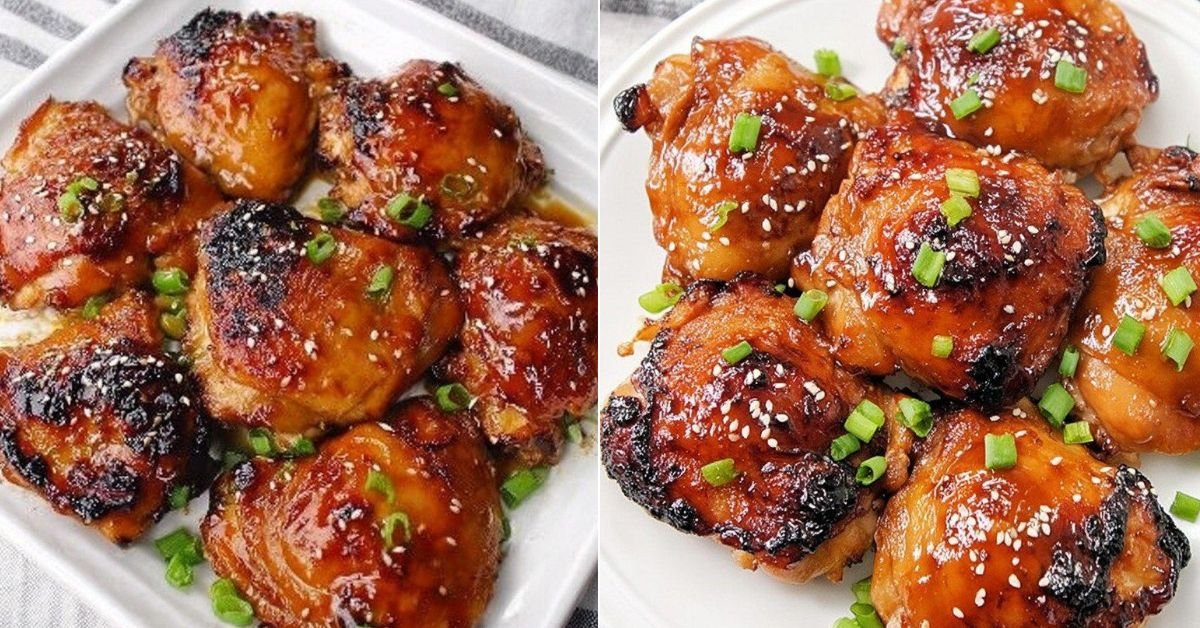
1) What I Learned Testing Oven Baked Teriyaki Chicken Thighs
Sticky glaze should cling to chicken, not slide into the pan. I’m Camila, and my early baked teriyaki chicken thighs either dried out or tasted flat because I brushed on thin marinade too late. After testing marinade time, sauce reduction, turning the thighs, and a short broil, I discovered the fix: reduce the unused marinade into a glossy sauce before it hits the oven. That small adjustment makes teriyaki chicken thighs juicy, savory-sweet, lightly charred, and calm enough for a family dinner when I want comfort without standing over a skillet.
Table of Contents
- 1) What I Learned Testing Oven Baked Teriyaki Chicken Thighs
- 2) Key Takeaways
- 3) Easy Oven Baked Teriyaki Chicken Thighs Recipe
- 4) Why Most Oven Baked Teriyaki Chicken Thighs Recipes Fail
- 5) Ingredients for Oven Baked Teriyaki Chicken Thighs
- 6) How to Make Oven Baked Teriyaki Chicken Thighs
- 7) Recipe Card: Oven Baked Teriyaki Chicken Thighs
- 8) Tips for Making Oven Baked Teriyaki Chicken Thighs
- 9) Common Mistakes & Fixes
- 10) How to Tell Oven Baked Teriyaki Chicken Thighs Are Done
- 11) Professional Secrets Behind Better Oven Baked Teriyaki Chicken Thighs
- 12) Best Dishes or Pairings to Serve With Oven Baked Teriyaki Chicken Thighs
- 13) Making Oven Baked Teriyaki Chicken Thighs Ahead of Time
- 14) Storing Leftover Oven Baked Teriyaki Chicken Thighs
- 15) FAQ (Real Cooking Questions)
- 16) Save This Oven Baked Teriyaki Chicken Thighs Recipe
- 17) Conclusion
- 18) Nutrition
2) Key Takeaways
- Reduce the sauce first: Thin marinade runs off chicken, while a thickened teriyaki sauce clings, browns, and gives baked teriyaki chicken thighs their sticky finish.
- Use separate sauce safely: The marinade that touched raw chicken is discarded, and clean reduced sauce is reserved for brushing after baking.
- Match timing to the cut: Boneless skinless thighs cook faster, while bone-in skin-on thighs need a little longer to reach juicy doneness.
- Broil briefly, not aggressively: A 1 to 3 minute broil gives light char, but honey and brown sugar can burn quickly if ignored.
3) Easy Oven Baked Teriyaki Chicken Thighs Recipe
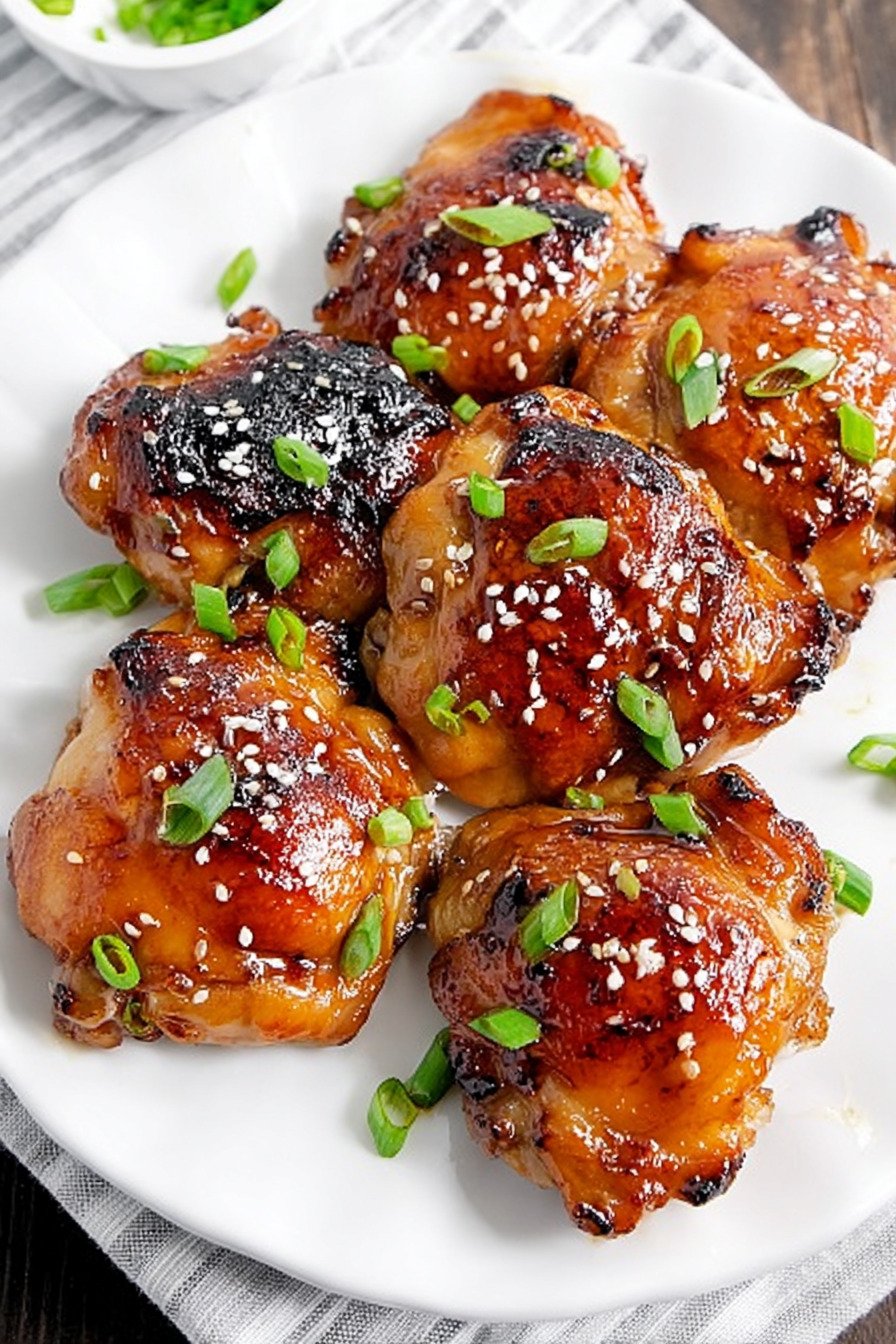
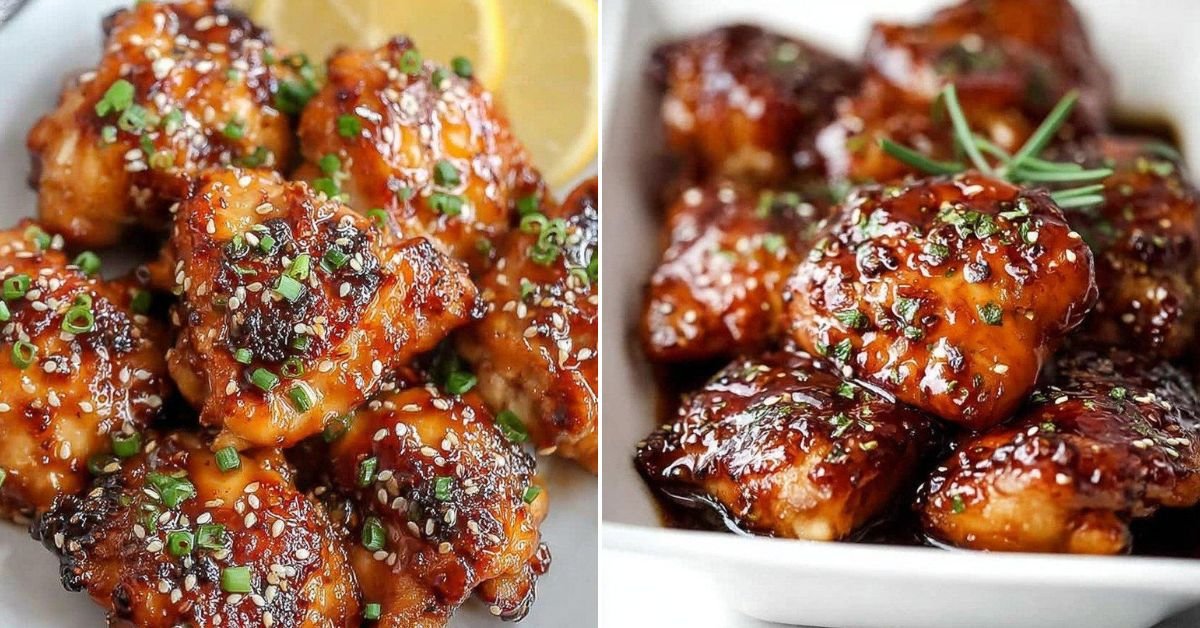
These oven baked teriyaki chicken thighs work because the flavor is built in two stages. First, the chicken gets enough time in the soy, honey, garlic, ginger, and rice vinegar marinade to season the surface. Second, the unused marinade is simmered with a small cornstarch slurry until it turns glossy and slightly reduced. That reduction step is what separates sticky teriyaki baked chicken thighs from chicken coated in a watery glaze. The oven does the steady cooking, the sauce builds the lacquered finish, and the final rest keeps the meat juicy before the last clean brush of sauce.
4) Why Most Oven Baked Teriyaki Chicken Thighs Recipes Fail
Most teriyaki chicken thighs fail for one of five reasons. First, the sauce is too thin, so it pools on the pan instead of sticking to the meat. Simmering the unused marinade with cornstarch fixes that by giving the sauce body and shine. Second, the chicken is baked too long, especially when using boneless thighs, which dry out faster than bone-in pieces. Third, the sauce is brushed only at the end, so the chicken never develops layered flavor. Fourth, the sweet glaze is broiled too hard, which can turn the honey and brown sugar bitter. Fifth, the chicken is sliced immediately instead of resting, so the juices escape before the final glossy brush.
5) Ingredients for Oven Baked Teriyaki Chicken Thighs
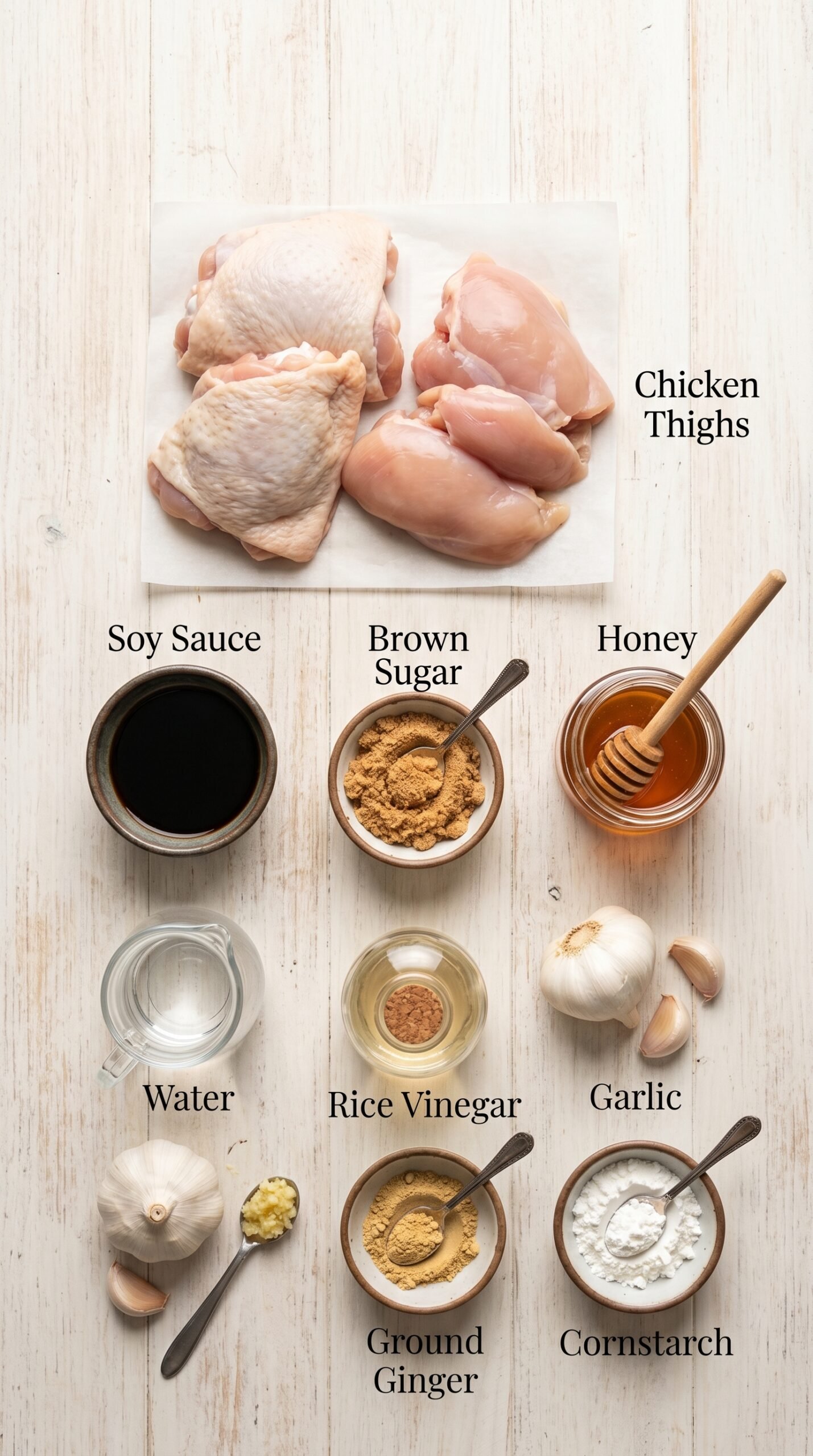
Chicken thighs: Use 2 to 2 ½ pounds of boneless skinless or bone-in skin-on chicken thighs. Thigh meat stays more forgiving than chicken breast because it has enough fat and connective tissue to remain juicy during oven baking.
Soy sauce: Soy sauce is the salty, savory base of the teriyaki marinade. It seasons the chicken quickly, so avoid adding extra salt until you taste the finished sauce with your sides.
Brown sugar: Brown sugar brings deeper sweetness and helps the glaze darken. If reduced too aggressively, it can taste sharp or burnt, so keep the sauce at a simmer after it boils.
Honey: Honey gives the glaze its shine and sticky texture. It also browns fast under the broiler, which is why the final char should be brief and watched closely.
Water: Water loosens the marinade so the soy sauce, sugar, honey, vinegar, garlic, and ginger blend smoothly before reducing.
Rice vinegar: Rice vinegar balances the sweetness and keeps the sauce from tasting heavy. Without acidity, teriyaki sauce can taste flat even when it looks glossy.
Garlic: Minced garlic gives the sauce a warm savory edge. Fresh garlic tastes brighter than dried garlic powder, but it should be minced finely so it does not burn in large pieces.
Ground ginger: Ground ginger adds gentle heat and aroma throughout the sauce. Stir it well into the liquid so it does not clump in one spot.
Cornstarch slurry: Cornstarch mixed with water thickens the unused marinade into a brushable sauce. Adding dry cornstarch directly to hot liquid can create lumps, so always make the slurry first.
- Boneless vs bone-in thighs: Teriyaki chicken thighs boneless cook faster and are easy to slice for rice bowls, while bone-in skin-on thighs usually need more oven time and develop deeper roasted flavor.
- Reduced sauce vs raw marinade: Reduced clean marinade becomes glossy and safe for brushing, while used raw marinade must be discarded because it touched uncooked chicken.
- Short marinade vs overnight marinade: A 15 to 30 minute marinade gives surface flavor, while overnight marinating gives a deeper soy-garlic taste. Longer is not always better if the chicken pieces are very small.
- Baking vs skillet cooking: The oven gives steady heat and less splatter, while the broiler adds the final lightly charred finish that makes the sauce look lacquered.
6) How to Make Oven Baked Teriyaki Chicken Thighs
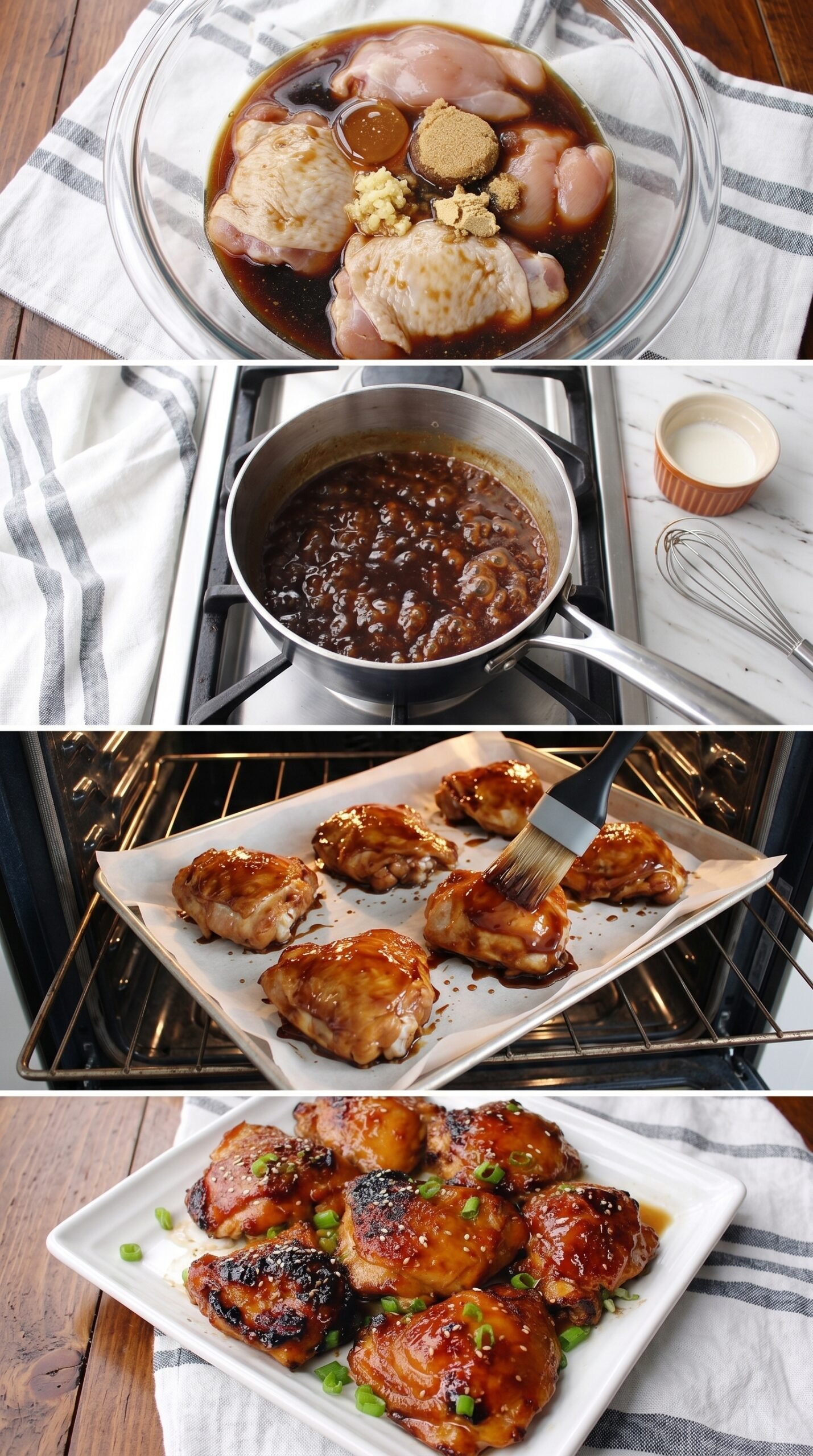
Step 1: Stir the soy sauce, brown sugar, honey, water, rice vinegar, minced garlic, and ground ginger until the sugar dissolves. The marinade should look smooth, not grainy at the bottom of the bowl.
Step 2: Marinate the chicken with ½ cup of the mixture in a covered bowl or freezer bag. Keep the remaining marinade separate and refrigerated so it can be turned into a safe finishing sauce later.
Step 3: Simmer the unused marinade with a cornstarch slurry until it thickens and reduces by about one-third. Look for a glossy texture that coats the spoon lightly instead of dripping like water.
Step 4: Arrange the chicken top side down on a lined baking sheet, brush with sauce, and bake at 375°F. Turn the thighs halfway through and brush again so both sides get flavor and color.
Step 5: Use the correct timing for the cut: about 12 minutes per side for boneless skinless thighs or about 15 minutes per side for bone-in skin-on thighs. The thickest part should reach 165°F.
Step 6: Broil for 1 to 3 minutes to lightly char the glaze, then rest the chicken for about 5 minutes. Brush with the reserved clean sauce so the final surface looks shiny, sticky, and fresh.
7) Recipe Card: Oven Baked Teriyaki Chicken Thighs
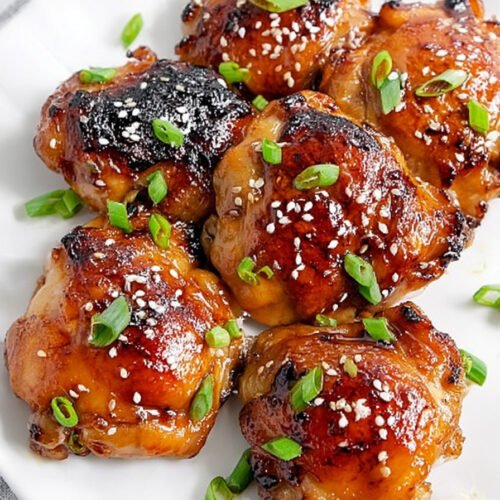
Oven Baked Teriyaki Chicken Thighs with Sticky Homemade Sauce
Ingredients
- 2 to 2 ½ pounds chicken thighs, boneless skinless or bone-in skin-on, trimmed of excess fat so the glaze coats evenly
- Teriyaki Marinade and Sauce
- ½ cup soy sauce, the salty base that seasons the chicken and balances the sweetness
- ¼ cup brown sugar, packed lightly so the sauce thickens with a caramel-like finish
- ¼ cup honey, for glossy sweetness and sticky baked edges
- ¼ cup water, to loosen the marinade before reducing it into sauce
- 2 tablespoons rice vinegar, for gentle acidity that keeps the glaze from tasting flat
- 1 clove minced garlic, fresh for the best aroma
- ½ teaspoon ground ginger, stirred in well so it disperses evenly
- Cornstarch slurry: 1 teaspoon cornstarch plus 1 teaspoon water, mixed smooth before adding to the hot sauce
Instructions
Teriyaki Marinade & Sauce
- Combine the soy sauce, brown sugar, honey, water, rice vinegar, minced garlic, and ground ginger in a small bowl. Stir until the sugar is fully dissolved and the mixture looks smooth and glossy.
- Place the chicken thighs in a covered bowl or freezer bag with ½ cup of the marinade. Refrigerate for at least 15 to 30 minutes, or up to overnight for deeper flavor. Keep the unused marinade separate in the refrigerator.
- Pour the unused marinade into a small saucepan over medium to medium-high heat. In a small bowl, stir together 1 teaspoon cornstarch and 1 teaspoon water until no dry cornstarch remains.
- When the marinade reaches a boil, stir in the cornstarch mixture, then reduce the heat to a simmer. Cook and stir for 10 to 12 minutes, until the sauce thickens, looks glossy, and reduces by about one-third.
- Spoon 2 to 3 tablespoons of the finished sauce into a separate clean bowl for brushing over the cooked chicken at the end.
Glazed Chicken Thighs
- Preheat the oven to 375°F. Line a baking sheet with parchment paper or aluminum foil for easier cleanup and to catch the sticky glaze.
- Remove the chicken thighs from the marinade and discard the used marinade. Arrange the thighs top side down on the prepared baking sheet, then brush the chicken with the thickened teriyaki sauce.
- For boneless skinless chicken thighs, bake for 12 minutes. Turn the chicken, brush with more sauce, and bake for another 12 minutes, or until the thickest part reaches 165°F and the juices run clear.
- For bone-in skin-on chicken thighs, bake for 15 minutes. Turn the chicken, brush with more sauce, and bake for another 15 minutes, or until the thickest part reaches 165°F without touching the bone.
- Broil for 1 to 3 minutes to lightly char the sauce, watching closely because the honey and sugar can darken quickly. Let the chicken rest for about 5 minutes, then brush with the reserved clean sauce and finish with sesame seeds and sliced green onions if desired.
8) Tips for Making Oven Baked Teriyaki Chicken Thighs
The sauce should be thick enough to brush, but not so thick that it turns gummy before baking. If it reduces too far, loosen it with a small splash of water and stir until glossy again. For boneless skinless chicken thigh recipes baked teriyaki style, start checking doneness near the 22 minute mark because smaller thighs can cook quickly. For bone-in pieces, give the heat time to travel near the bone and check with a thermometer instead of guessing by color. When broiling, keep the baking sheet close enough to bubble the glaze but not so close that the sugar blackens before the chicken warms through.
9) Common Mistakes & Fixes
Problem: The sauce slides off the chicken. Cause: The marinade was not reduced enough or the chicken was too wet when brushed. Fix: Simmer the unused marinade until glossy and let excess marinade drip off the chicken before baking.
Problem: The chicken tastes dry. Cause: Boneless thighs were baked as long as bone-in thighs, or the chicken was not rested. Fix: Match the timing to the cut, check for 165°F, and rest for 5 minutes before serving.
Problem: The glaze tastes burnt. Cause: The broiler was too intense or the chicken was left under it too long. Fix: Broil only 1 to 3 minutes and pull the pan as soon as the sauce bubbles and lightly chars.
Problem: The flavor tastes one-dimensional. Cause: Sweetness was not balanced with acidity and aromatics. Fix: Keep the rice vinegar, garlic, and ginger in the sauce because they give teriyaki chicken thighs a cleaner, more complete flavor.
10) How to Tell Oven Baked Teriyaki Chicken Thighs Are Done
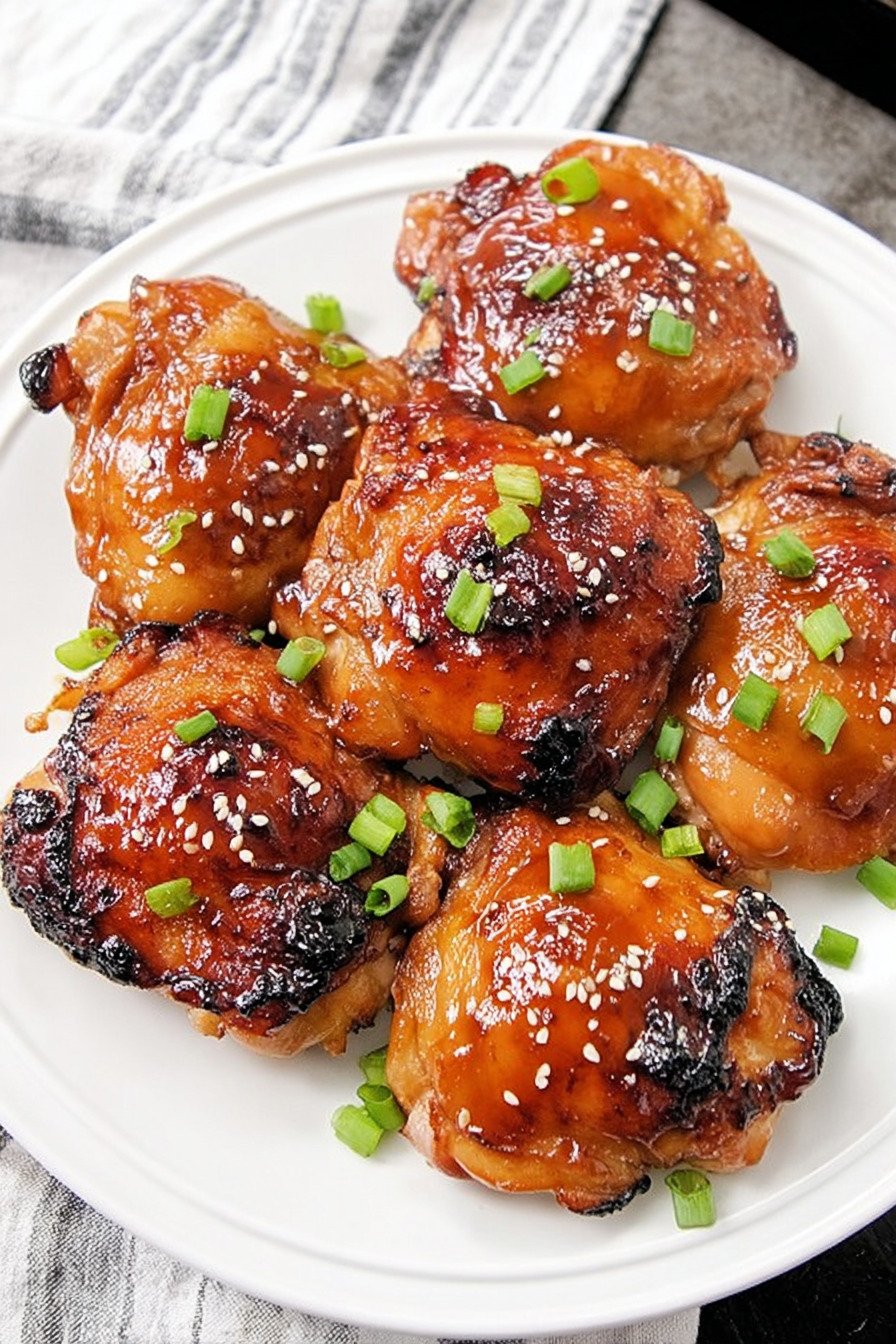
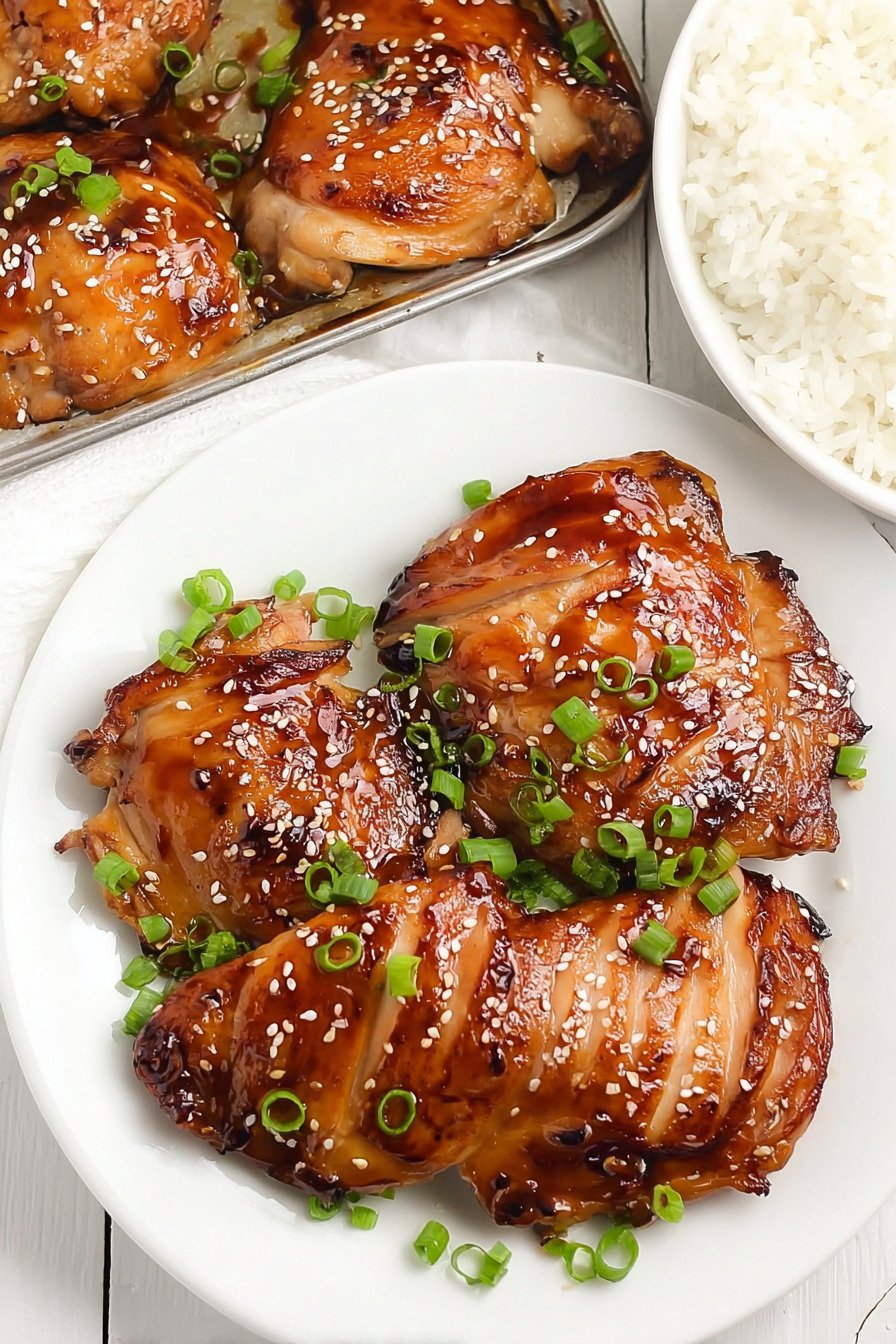
Oven baked teriyaki chicken thighs are done when the thickest part reaches 165°F and the juices run clear. Visually, the glaze should look shiny and slightly tacky, with small darker spots from the broiler rather than a black crust. The chicken should feel firm but not tight when pressed with tongs. Boneless thighs should slice easily without looking stringy or dry. Bone-in thighs should pull cleanly near the bone but still look moist. The aroma should be savory, garlicky, lightly sweet, and toasted, not smoky or bitter. If watery liquid collects around the chicken, the sauce was likely too thin or the pan was crowded.
11) Professional Secrets Behind Better Oven Baked Teriyaki Chicken Thighs
The biggest professional-style trick is layering the glaze instead of relying on one heavy coat. A thin coat before baking helps flavor the surface, another coat after turning builds color, and the final clean sauce after resting gives the chicken its glossy finish. Another useful technique is lining the pan so the sauce does not scorch directly onto bare metal. For stickier teriyaki chicken thighs oven results, avoid overcrowding; crowded chicken steams and releases more liquid, which weakens the glaze. The final broil is not meant to cook the chicken through. It is only there to bubble, darken, and lightly char the sauce.
12) Best Dishes or Pairings to Serve With Oven Baked Teriyaki Chicken Thighs
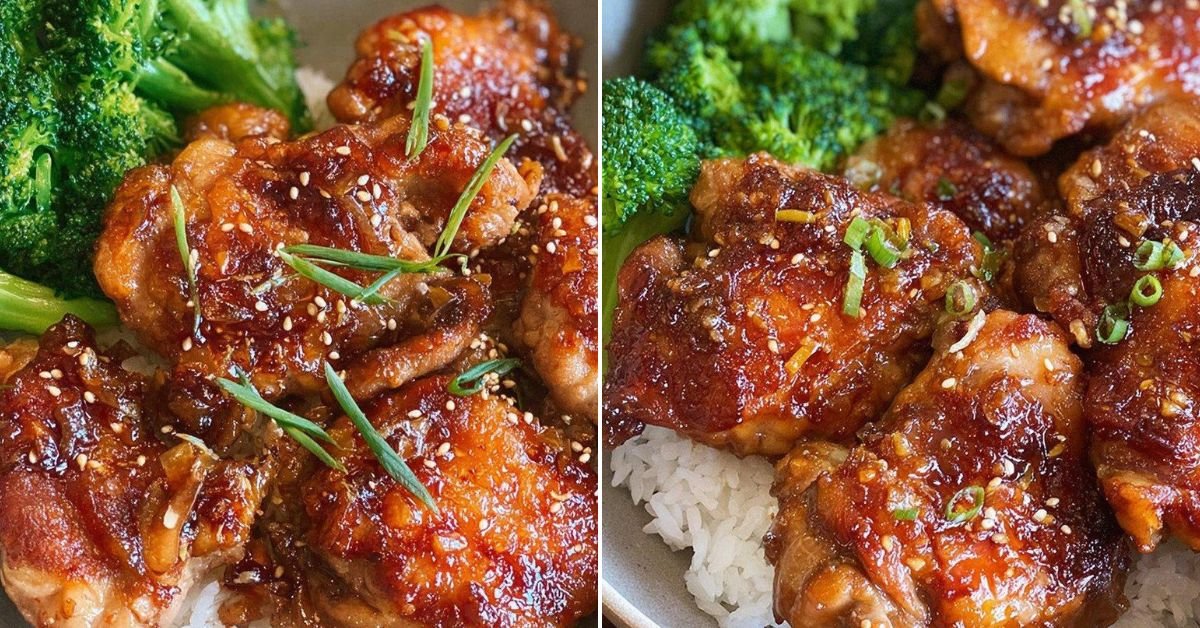
Baked teriyaki chicken thighs pair well with plain steamed rice because the rice absorbs the glossy sauce without competing with it. For vegetables, use broccoli, snap peas, green beans, cabbage, roasted carrots, or a cucumber salad with rice vinegar. Noodles also work well, especially if you slice the chicken and spoon extra sauce over the top. For a lighter plate, serve the chicken with lettuce cups, shredded carrots, and scallions. If the sauce tastes rich, add something crisp or fresh on the side rather than adding more sweetness to the meal.
13) Making Oven Baked Teriyaki Chicken Thighs Ahead of Time
You can marinate the chicken ahead for 15 to 30 minutes or up to overnight. Keep the unused marinade separate and refrigerated until you are ready to simmer it into sauce. The sauce can also be reduced in advance, cooled, covered, and refrigerated. Before baking, warm it gently so it brushes smoothly. For meal prep, teriyaki chicken thighs boneless are especially convenient because they slice cleanly for rice bowls and reheat faster. Do not brush cooked chicken with sauce that has touched raw chicken; reserve a clean portion after simmering for the final glossy finish.
14) Storing Leftover Oven Baked Teriyaki Chicken Thighs
Store leftover oven baked teriyaki chicken thighs in an airtight container in the refrigerator for up to 3 days. The glaze thickens as it chills, so reheat gently with a spoonful of water to loosen the sauce. A covered skillet over low heat works well because it warms the chicken without drying the surface. You can also reheat in a low oven until warmed through. Freezing is possible, but the glaze may lose some shine after thawing. Leftovers are useful in rice bowls, wraps, noodle bowls, chopped salads, or quick lunches with steamed vegetables.
15) FAQ (Real Cooking Questions)
Can I use boneless thighs instead of bone-in thighs? Yes. Boneless skinless thighs work well, but they cook faster. Bake them for about 12 minutes per side, then check the thickest part for 165°F.
Can I marinate the chicken overnight? Yes. Overnight marinating gives deeper flavor, but keep the unused marinade separate from the raw chicken so it can be safely cooked into the glaze.
Why do I need to thicken the sauce? Thickening helps the sauce cling to the chicken. Without reducing the unused marinade and adding the slurry, the glaze may run onto the pan instead of coating the meat.
Can I skip the broiler? Yes, but the glaze will be softer and less caramelized. The broiler gives sticky teriyaki baked chicken thighs their lightly charred edges, so use it briefly if you want that finish.
What should I do if the sauce gets too thick? Stir in a small splash of water and warm it gently until it becomes brushable again. The sauce should coat the spoon but still spread easily over the chicken.
16) Save This Oven Baked Teriyaki Chicken Thighs Recipe
If this oven baked teriyaki chicken thighs recipe helped you solve the problem of thin sauce and dry chicken, save it for a weeknight dinner or meal prep bowl. The key reminder is: reduce the unused marinade first, brush in layers, and broil briefly for a sticky finish.

17) Conclusion
Once you understand the sauce, this recipe becomes much easier to control. The marinade seasons the chicken, the reduced glaze creates shine, the oven cooks the thighs steadily, and the short broil adds color without turning the sauce bitter. That is the difference between chicken that tastes like it was simply baked with sauce and baked teriyaki chicken thighs that come out juicy, glossy, and balanced. Keep the timing tied to the cut, rest the meat before serving, and finish with clean reserved sauce for the best texture and flavor.
18) Nutrition
Serving Size 1 portion Calories 385 Sugar 19 g Sodium 1190 mg Fat 18 g Saturated Fat 5 g Carbohydrates 24 g Fiber 0 g Protein 32 g Cholesterol 155 mg






Leave a Comment