
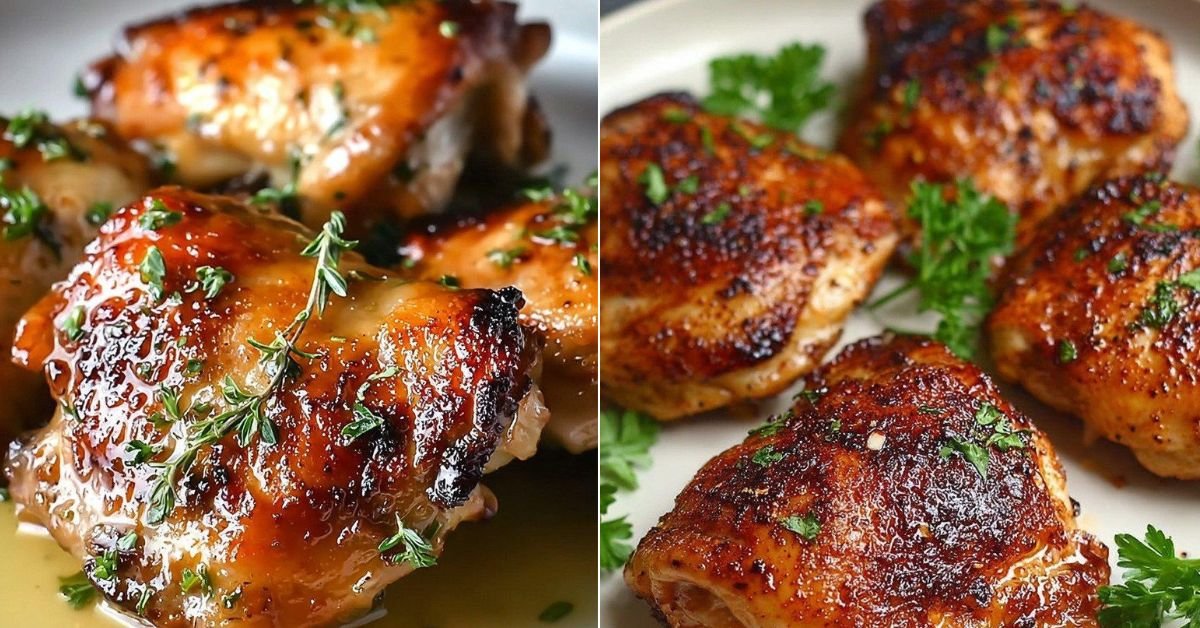
What I Learned Testing Pan Seared Boneless Chicken Thighs
Dry chicken in a skillet is usually not a seasoning problem; it is a heat and timing problem. I’m Camila, and my first pan seared chicken thighs looked beautifully browned but lost too much juice when I sliced them. After testing hotter pans, drier surfaces, and longer resting time, I discovered the real fix: let the crust form undisturbed, cook to 165°F, then pause before cutting. That small adjustment turned boneless chicken thighs into the calm kind of quick weeknight chicken dinner I can trust when everyone is hungry and I need dinner to work.
Table of Contents
- 1) What I Learned Testing Pan Seared Boneless Chicken Thighs
- 2) Key Takeaways
- 3) Easy Pan Seared Boneless Chicken Thighs Recipe
- 4) Why Most Pan Seared Boneless Chicken Thighs Recipes Fail
- 5) Ingredients for Pan Seared Boneless Chicken Thighs
- 6) How to Make Pan Seared Boneless Chicken Thighs
- 7) Recipe Card: Pan Seared Boneless Chicken Thighs
- 8) Tips for Making Pan Seared Boneless Chicken Thighs
- 9) Common Mistakes & Fixes
- 10) How to Tell Pan Seared Boneless Chicken Thighs Are Done
- 11) Professional Secrets Behind Better Pan Seared Boneless Chicken Thighs
- 12) Best Dishes or Pairings to Serve With Pan Seared Boneless Chicken Thighs
- 13) Making Pan Seared Boneless Chicken Thighs Ahead of Time
- 14) Storing Leftover Pan Seared Boneless Chicken Thighs
- 15) FAQ (Real Cooking Questions)
- 16) Save This Pan Seared Boneless Chicken Thighs Recipe
- 17) Conclusion
- 18) Nutrition
2) Key Takeaways
- Dry the chicken first: Surface moisture blocks browning, so patting the thighs dry is the first step toward a deep golden crust.
- Do not move the chicken too soon: The crust forms only when the meat stays in contact with the hot skillet long enough to release naturally.
- Use temperature, not guessing: Boneless chicken thighs are ready when the thickest part reaches 165°F on an instant-read thermometer.
- Rest before slicing: A five-minute rest keeps the juices inside the meat instead of spilling onto the cutting board.
3) Easy Pan Seared Boneless Chicken Thighs Recipe
Pan seared boneless chicken thighs are one of those easy chicken thigh recipes that can taste deeply savory without a long marinade. The success comes from treating the skillet like a flavor tool. A hot pan dries and browns the seasoned surface quickly, while the thicker, juicier nature of chicken thighs gives you a little more forgiveness than chicken breast.
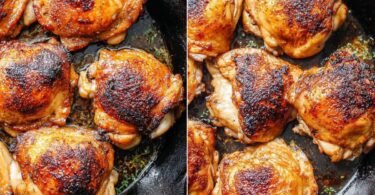
The goal is not just cooked chicken. The goal is chicken with crisp browned edges, a tender center, and seasoning that tastes toasted rather than raw. Paprika gives color, garlic and onion granules add savory depth without wetness, and Italian seasoning brings a gentle herb note. Because the seasoning is dry, it supports browning instead of fighting it.
This method works especially well for a quick weeknight chicken dinner because the prep is short, the cook time is controlled, and the finished chicken can be served several ways. Slice it over rice, tuck it into wraps, serve it beside vegetables, or keep it whole with lemon and herbs. The most important part is to respect the sear: hot skillet, dry chicken, steady contact, proper temperature, and a short rest.
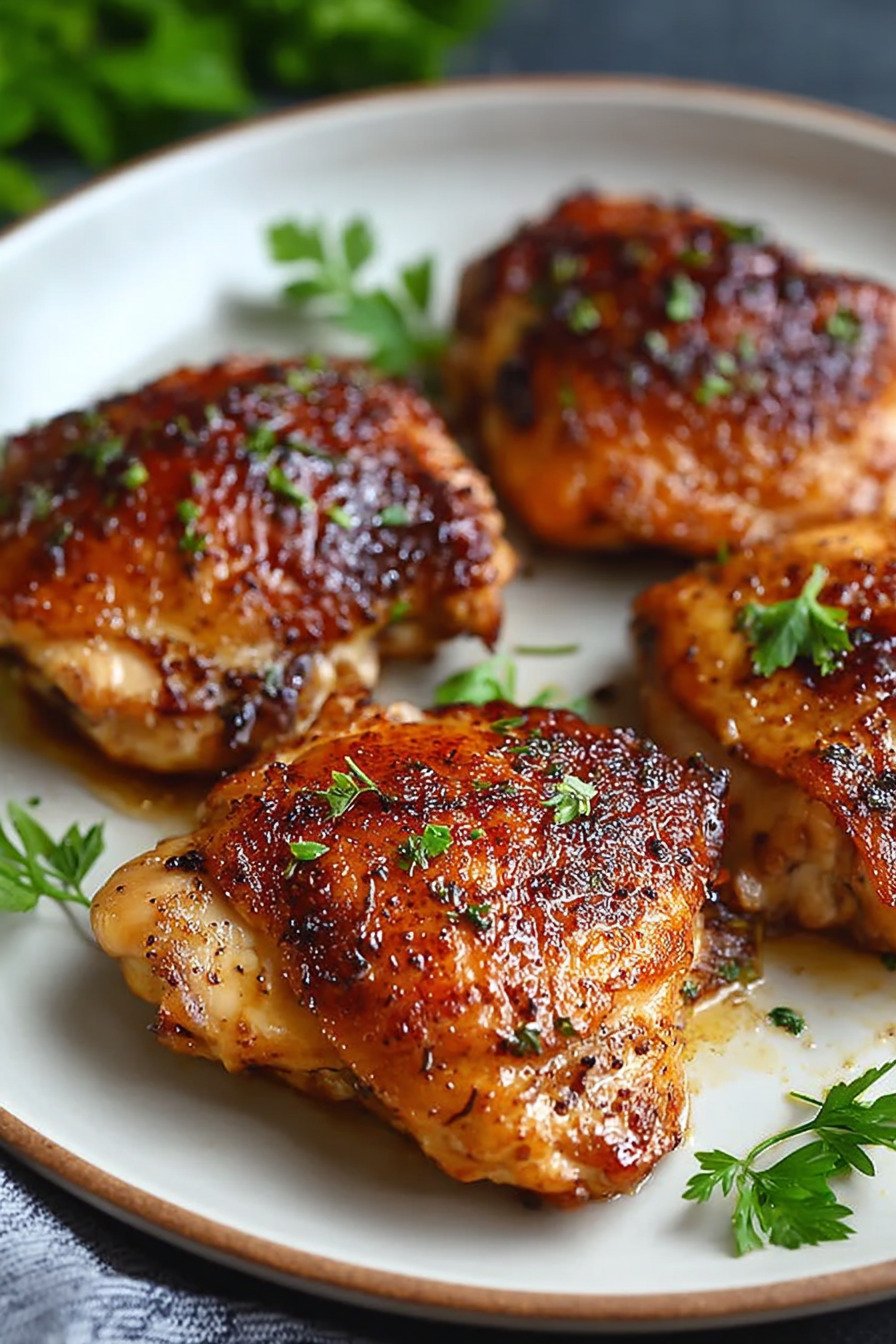
4) Why Most Pan Seared Boneless Chicken Thighs Recipes Fail
Most pan seared chicken thighs fail for one of five reasons: the chicken is wet, the skillet is not hot enough, the meat is moved too early, the heat is not adjusted after browning, or the chicken is sliced without resting. Each problem has a clear sign. Wet chicken looks pale and steamy. A cool pan makes the seasoning sit on the surface instead of blooming. Moving the chicken too soon tears the crust and leaves patchy browning.
Another common issue is cooking the outside too aggressively while the center lags behind. Medium-high heat is helpful for the first sear, but thicker pieces may need the heat lowered to medium once the crust forms. Covering briefly can help the center finish without burning the paprika and dried herbs. That is not cheating; it is heat control.
Flat flavor usually comes from seasoning only one side or forgetting salt. Salt needs to hit the meat evenly, while garlic granules, onion granules, and paprika work best when they can toast lightly in oil. Dryness often comes from overshooting the internal temperature or cutting immediately. The thermometer confirms doneness, and the rest gives the juices time to settle.
5) Ingredients for Pan Seared Boneless Chicken Thighs
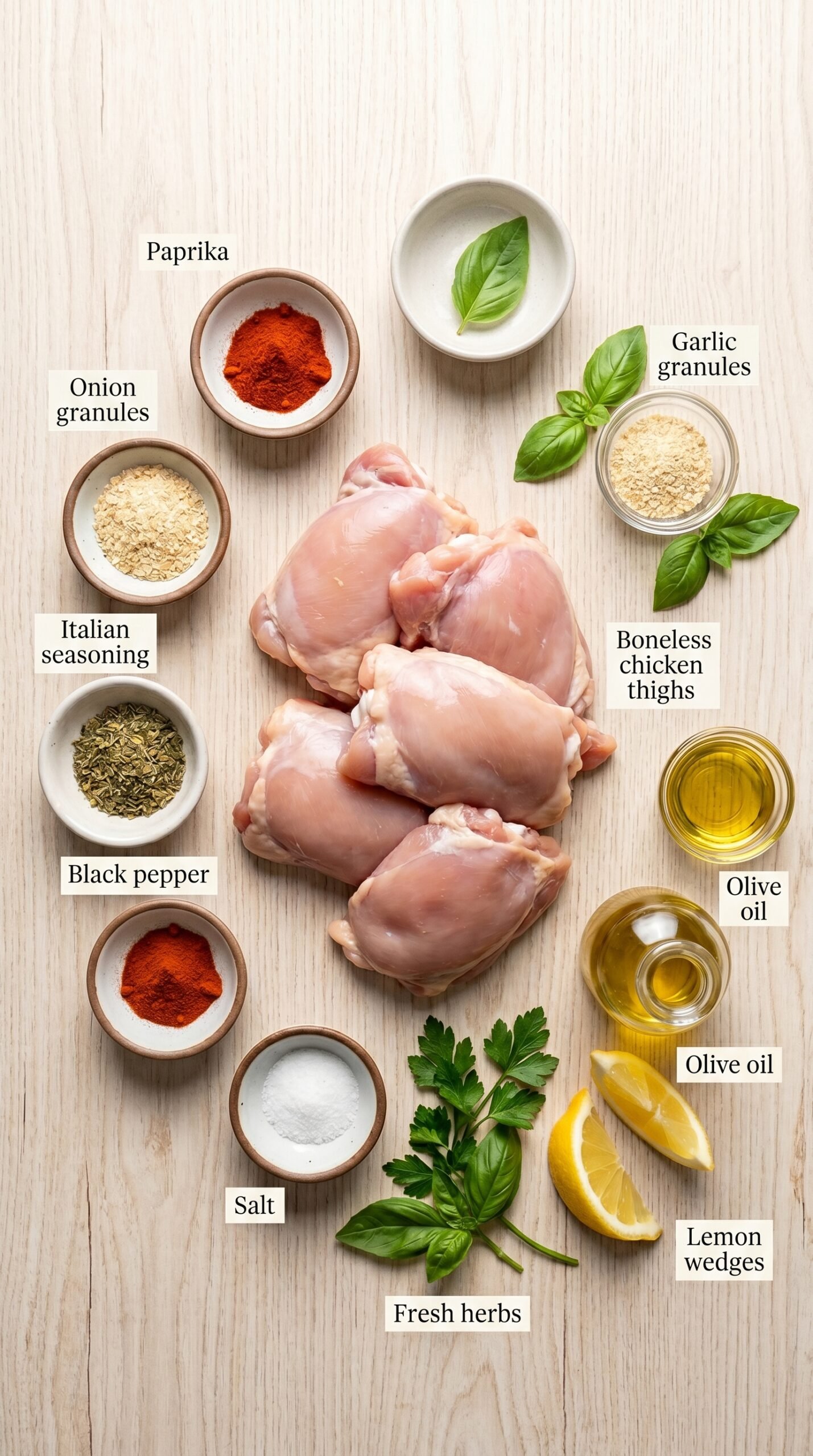
Boneless chicken thighs: These stay juicier than leaner cuts and are ideal for pan fried chicken thighs because they handle high heat well. Choose similar-sized pieces so they finish at the same time. If one piece is much thicker, it may need a brief covered finish after searing.
Paprika: Paprika adds warm color and a mild earthy sweetness. Sweet paprika keeps the flavor gentle, while smoked paprika adds a deeper, lightly smoky note. Add it just before cooking so it does not sit too long on the surface and pull out extra moisture.
Garlic granules: Granulated garlic gives savory flavor without the moisture of fresh garlic. Fresh garlic can burn quickly in a hot skillet, so garlic granules are better for this direct sear. Garlic powder can work too, but use an even coating so it does not clump.
Onion granules: Onion granules round out the seasoning and give the chicken a more complete savory base. They help the spice rub taste less flat, especially when the chicken is served with simple sides like rice, salad, or roasted vegetables.
Italian seasoning: This dried herb blend adds a gentle background flavor. Because dried herbs can darken quickly, keep an eye on the crust and lower the heat if the outside browns before the chicken is fully cooked.
Black pepper: Freshly cracked black pepper adds light heat and aroma. It is best mixed into the seasoning so it spreads evenly across every piece instead of landing in harsh patches.
Salt: Salt is what makes the chicken taste seasoned all the way through each bite. Kosher salt is easier to distribute by hand, but any salt can work if you season both sides evenly and avoid heavy piles in one spot.
Olive oil: Oil helps the seasoning cling and helps conduct heat between the skillet and chicken. A light or refined olive oil works well because it tolerates skillet heat better than delicate finishing oil. A neutral high-smoke-point oil is also fine.
Fresh herbs: Parsley or basil should be added after cooking, not during the hard sear. Fresh herbs brighten the final plate and make reheated chicken taste fresher.
Lemon wedges: Lemon is optional, but a small squeeze at the end cuts through the richness of boneless chicken thighs and wakes up the paprika and herbs.
- Boneless thighs vs chicken breast: Thighs have more internal moisture and are less likely to turn chalky when pan seared.
- Dry rub vs wet marinade: A dry rub encourages browning faster, while a wet marinade can slow crust formation if not wiped off well.
- Granulated garlic vs fresh garlic: Granulated garlic survives the hot skillet better, while fresh garlic can scorch before the chicken finishes.
- Medium-high heat vs high heat: Medium-high creates strong browning with more control; full high heat can burn the spices before the center reaches 165°F.
6) How to Make Pan Seared Boneless Chicken Thighs
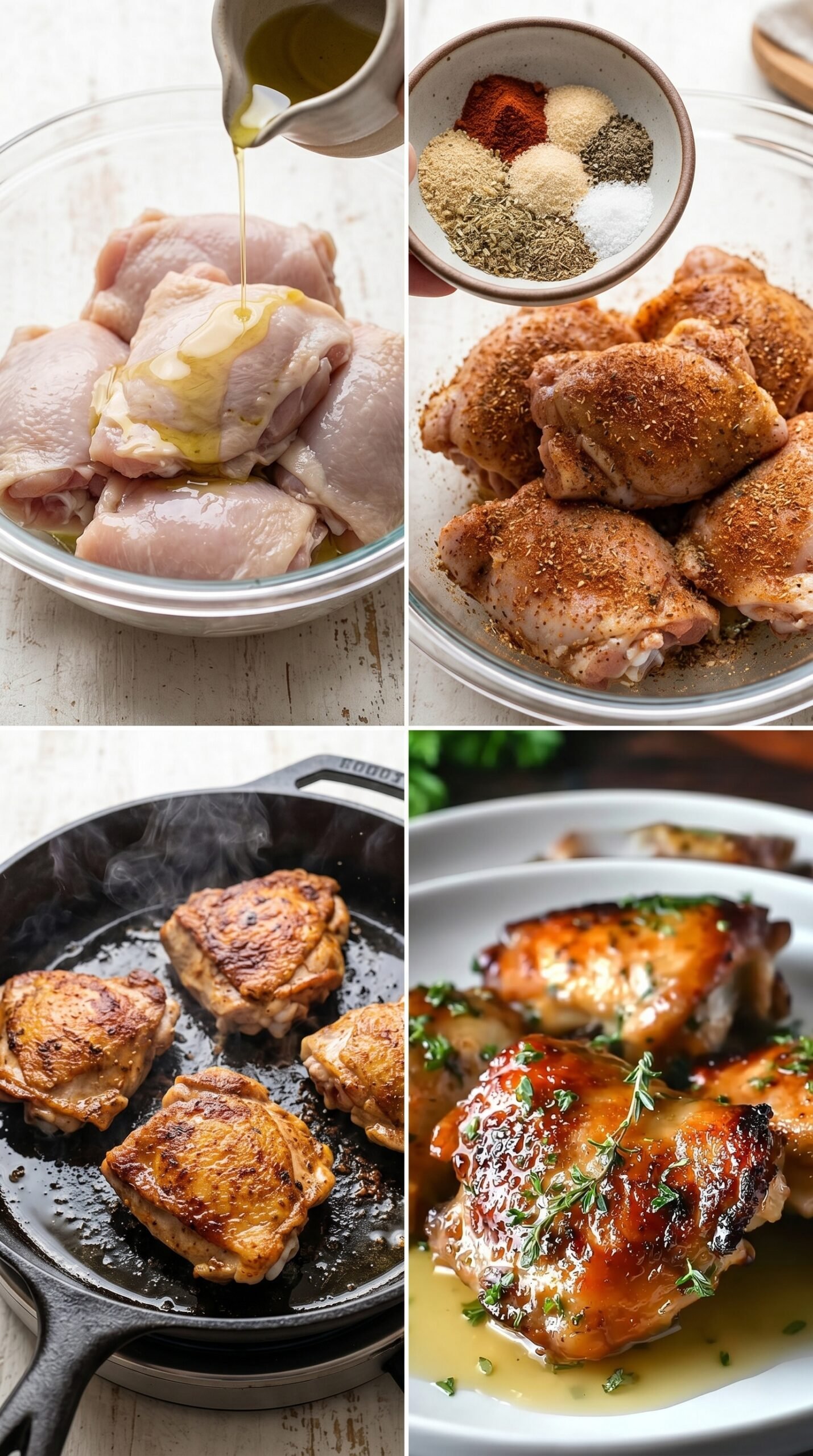
Step 1: Pat the boneless chicken thighs very dry with paper towels. This is the step many cooks rush, but it decides whether the chicken browns or steams. Once dry, place the thighs in a bowl and coat them lightly with olive oil so the seasoning sticks in a thin, even layer.
Step 2: Mix the paprika, garlic granules, onion granules, Italian seasoning, black pepper, and salt in a small bowl. Toss the chicken in the rub until both sides are evenly coated. Look for a light red-orange surface without wet clumps or bare patches.
Step 3: Heat a heavy skillet over medium-high heat until the surface is hot and the oil shimmers. If the pan looks dry, add only a thin film of oil. Too much oil can make the chicken fry unevenly, while too little can cause the crust to stick.
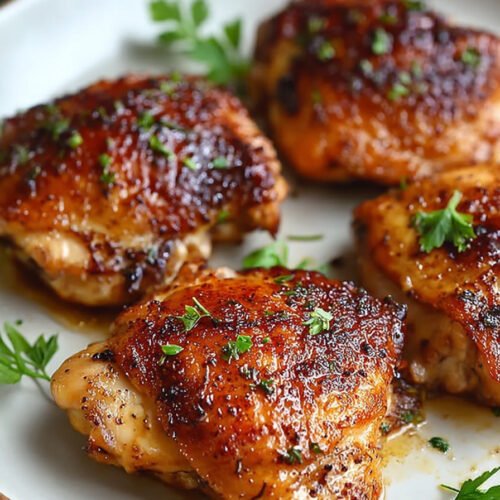
Step 4: Place the thighs presentation side down and leave them alone for 4–6 minutes. Do not poke, slide, or flip early. When the crust is ready, the chicken should release more easily and show a deep golden-brown surface. Flip and cook the second side for another 4–6 minutes.
Step 5: If the outside is browning too quickly, lower the heat to medium or cover briefly for thicker pieces. Cook until an instant-read thermometer reads 165°F in the thickest part. Transfer the chicken to a board, rest for 5 minutes, then slice against the grain and finish with herbs or lemon if desired.
7) Recipe Card: Pan Seared Boneless Chicken Thighs
Pan Seared Boneless Chicken Thighs
Ingredients
- 5 pieces boneless chicken thighs, trimmed of excess loose fat, similar in size, and patted very dry for better browning
- 1 teaspoon paprika, sweet or smoked, added just before searing for color and warm flavor
- 1/4 teaspoon garlic granules, or garlic powder, to add savory flavor without extra moisture
- 1/4 teaspoon onion granules, for mild sweetness and deeper seasoning
- 1/4 teaspoon Italian seasoning, a dried herb blend such as oregano, basil, and thyme
- 1/4 teaspoon black pepper, freshly cracked if possible, or adjusted to taste
- to taste salt, preferably kosher salt, for seasoning both sides evenly
- 2 tablespoons olive oil, light or refined olive oil, or another neutral high-smoke-point oil
- to taste fresh herbs (parsley or basil), added after resting for a fresh finish
- 2 wedges lemon, optional, for squeezing over the chicken just before serving
Instructions
- Pat the boneless chicken thighs dry with paper towels, then place them in a bowl and drizzle with 2 tablespoons olive oil so the seasoning can cling evenly without making the surface wet.
- In a small bowl, mix the paprika, garlic granules, onion granules, Italian seasoning, black pepper, and salt, then toss the thighs in the seasoning until every piece is evenly coated.
- Heat a heavy skillet over medium-high heat until the oil looks shimmery and the pan feels properly hot; add a thin extra film of oil only if the skillet looks dry or the chicken may stick.
- Place the thighs presentation side down and sear without moving them for 4–6 minutes, until a deep golden-brown crust forms, then flip and sear the second side for another 4–6 minutes.
- Reduce the heat to medium, or cover briefly for thicker pieces if the crust is browning faster than the center is cooking, and continue until an instant-read thermometer reads 165°F in the thickest part.
- Transfer the chicken thighs to a cutting board and rest for 5 minutes, tenting loosely with foil if needed, so the juices settle back into the meat instead of running out when sliced.
- Slice against the grain and serve right away with herbs and lemon if desired, or cool completely and store in an airtight container in the refrigerator for 3–4 days or freeze for up to 2 months; reheat gently to keep the meat moist.
8) Tips for Making Pan Seared Boneless Chicken Thighs
The fastest way to improve pan seared boneless chicken thighs is to control surface moisture. Pat the chicken dry before adding oil, and avoid letting the seasoned chicken sit too long at room temperature once salt is added. If moisture appears on the surface while the skillet heats, blot lightly again before searing.
Use a heavy skillet when possible. Cast iron, stainless steel, or another sturdy pan holds heat better than a thin nonstick skillet. When chicken hits the pan, the temperature drops. A heavier pan recovers faster, which helps the crust form instead of turning pale.
Do not crowd the skillet. If the thighs are packed tightly, steam gets trapped between them. Leave space around each piece so moisture can escape. If your skillet is small, cook in batches and wipe out burnt spice bits between batches if needed.
Watch the color of the seasoning, not just the clock. Paprika and dried herbs should toast and darken slightly, but they should not smell burnt. If the crust is getting too dark before the thermometer reaches 165°F, lower the heat and cover briefly.
Resting is not optional if you want juicy slices. Five minutes gives the juices time to redistribute. Slice too soon and the cutting board gets the moisture that should have stayed inside the chicken.
9) Common Mistakes & Fixes
Problem: The chicken looks pale instead of golden. Cause: The surface was too wet, the skillet was not hot enough, or the pieces were crowded. Fix: Pat the thighs dry, preheat the skillet until the oil shimmers, and leave space between pieces.
Problem: The seasoning burns before the chicken is done. Cause: The heat stayed too high after the first side browned. Fix: Sear over medium-high heat, then lower to medium once the crust forms, especially for thicker thighs.
Problem: The crust sticks to the pan. Cause: The chicken was flipped before the crust had time to set, or the pan was too dry. Fix: Wait 4–6 minutes before flipping and use a thin film of oil if the skillet needs it.
Problem: The chicken tastes flat. Cause: Salt was uneven or too light, and the seasoning did not coat both sides. Fix: Mix the rub before adding it to the chicken, then toss until each piece is evenly covered.
Problem: The chicken is dry after slicing. Cause: It was overcooked or cut immediately after leaving the skillet. Fix: Use a thermometer, stop at 165°F, and rest the chicken for 5 minutes before slicing.
10) How to Tell Pan Seared Boneless Chicken Thighs Are Done
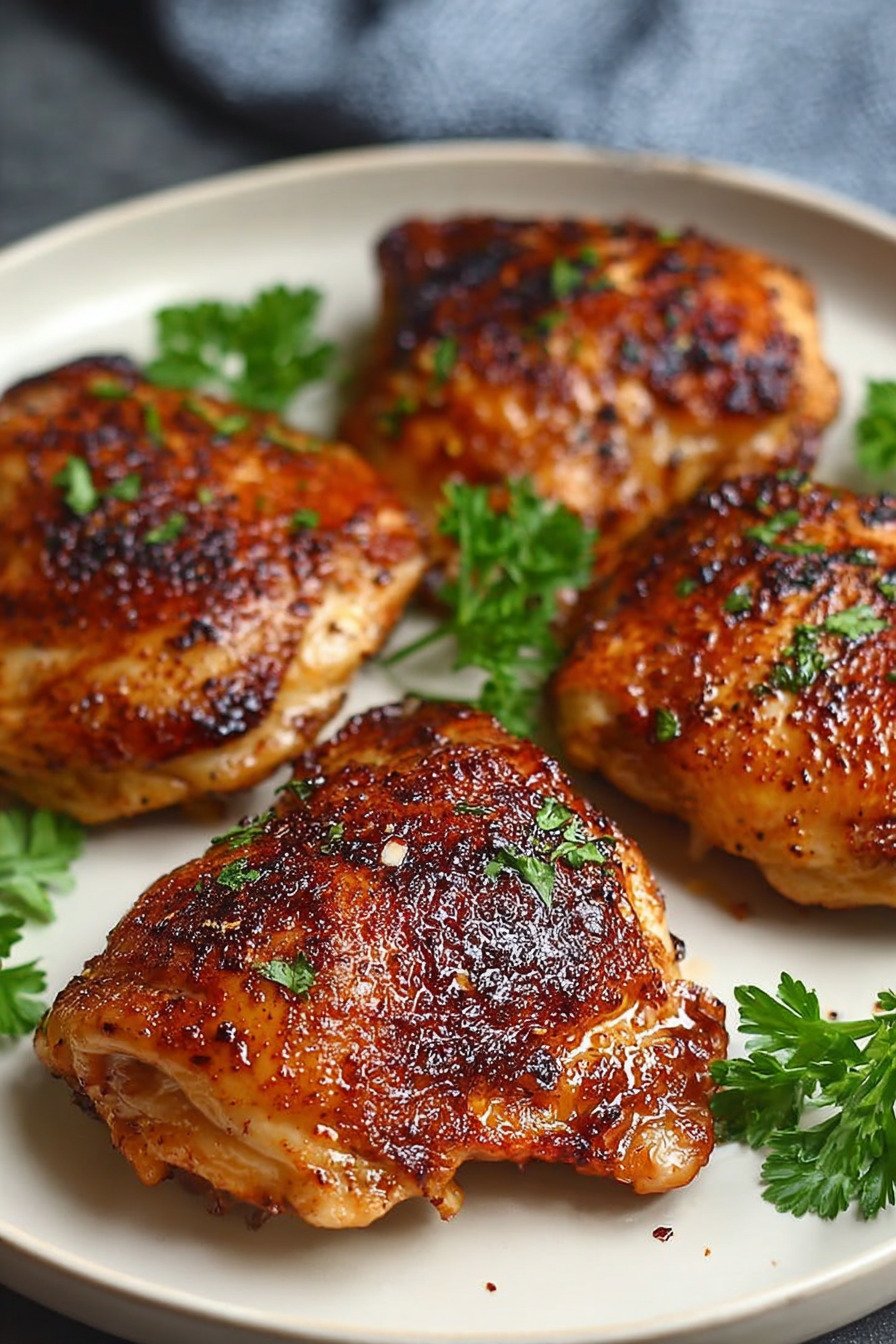
Properly cooked pan seared chicken thighs should have a deep golden-brown crust with darker toasted edges, but the surface should not look blackened or dusty. When pressed lightly with tongs, the meat should feel firm but still springy. If it feels hard and tight, it may be overcooked. If it feels loose and slippery, it likely needs more time.
The safest doneness cue is an instant-read thermometer inserted into the thickest part. Look for 165°F. Visually, the juices should run clear, and the inside should look opaque and moist when sliced after resting. The aroma should be savory, warm, and lightly herby, not harsh or burnt.
Failure signs are easy to spot. A watery plate means the chicken was likely sliced too soon. A rubbery surface can mean the pan was too cool and the meat steamed. A bitter smell means the paprika or herbs scorched. A patchy crust means the chicken moved before it had enough contact with the skillet.
11) Professional Secrets Behind Better Pan Seared Boneless Chicken Thighs
Better skillet chicken comes from managing contact. The chicken needs enough oil to connect it to the hot pan, but not so much that it floats. It needs enough heat to brown, but not so much heat that the spices burn. It needs enough time undisturbed to create a crust, but not so much time that the center overshoots the safe temperature.
Another useful technique is choosing a presentation side. Place the smoother, nicer-looking side down first because the first side usually gets the best crust. This gives the finished chicken a more appealing surface when served whole or sliced.
For more even cooking, remove thick clumps of loose fat and choose similar-sized thighs. You do not need to flatten them aggressively, but if one piece is folded under itself, open it up before seasoning. Flat contact means better browning and fewer undercooked thick spots.
Finish with freshness after the rest. Fresh parsley, basil, or lemon should come at the end because high heat dulls herbs and can make lemon taste bitter. Added after cooking, they brighten the chicken without interfering with the sear.
12) Best Dishes or Pairings to Serve With Pan Seared Boneless Chicken Thighs
Pan seared boneless chicken thighs pair well with sides that can catch the juices. Rice, couscous, mashed potatoes, roasted sweet potatoes, or buttered noodles all work because they balance the savory crust with a softer base. For a lighter plate, serve the chicken over a crisp green salad with lemon, herbs, and a simple vinaigrette.
Roasted vegetables are especially useful because they can cook while the chicken is being prepped. Broccoli, carrots, zucchini, green beans, or asparagus give the plate color and texture. If you want a comfort-style dinner, add warm bread or a creamy side. If you want a fresher meal, slice the chicken and serve it in wraps, bowls, or lettuce cups.
The seasoning is flexible enough for several directions. Add rice and cucumber salad for a bright dinner, roasted potatoes and green beans for a classic plate, or tortillas and slaw for quick chicken wraps. A small squeeze of lemon before serving helps the browned crust taste sharper and more complete.
13) Making Pan Seared Boneless Chicken Thighs Ahead of Time
You can prep the chicken ahead by trimming the thighs and mixing the dry seasoning. If seasoning in advance, keep the chicken refrigerated and blot the surface before cooking if moisture collects. The drier the surface when it hits the skillet, the better the crust will be.
For meal prep, cook the chicken fully, rest it, then cool it before storing. Whole pieces usually reheat more gently than thin slices, so keep the thighs whole if you plan to use them later. Slice after reheating or just before adding to bowls, salads, or wraps.
If serving later the same day, cook the chicken slightly before dinner, rest it, and keep it loosely covered. Rewarm gently in a covered skillet over low heat. Avoid blasting it over high heat a second time, because reheating too aggressively can dry the edges even when the original cook was correct.
14) Storing Leftover Pan Seared Boneless Chicken Thighs
Store leftover pan seared chicken thighs in an airtight container in the refrigerator for 3–4 days. Let the chicken cool before sealing the container so trapped steam does not soften the crust too much. If stacking pieces, place the nicest crust side up to protect the texture.
Freeze cooked chicken thighs for up to 2 months. Wrap them well or use a freezer-safe container to limit freezer burn. Thaw overnight in the refrigerator before reheating for the best texture.
To reheat, use a covered skillet over low heat with a tiny splash of water or broth, or microwave in short bursts at reduced power. The goal is gentle warming, not a second hard cook. Leftovers are useful in chicken rice bowls, chopped salads, pasta, quesadillas, sandwiches, and quick wraps.
15) FAQ (Real Cooking Questions)
Can I use chicken breast instead of boneless chicken thighs? You can, but the timing will change. Chicken breast is leaner and dries out faster, so pound it to an even thickness and check the internal temperature early. For this skillet method, thighs are more forgiving.
Why did my chicken release so much liquid? The chicken may not have been dry enough, the pan may have been too cool, or the skillet may have been overcrowded. Pat the meat dry, preheat the skillet well, and cook in batches if needed.
Can I marinate the chicken first? A marinade can work, but wipe off excess moisture before searing. Wet surfaces slow browning. For easy pan seared chicken, a dry seasoning blend is often faster and better for crust.
What pan is best for pan fried chicken thighs? A heavy skillet is best because it holds steady heat. Cast iron and stainless steel both work well. Nonstick can work, but it may not create the same deep crust.
How do I keep the chicken juicy when reheating? Reheat gently and avoid high heat. A covered skillet with a small splash of liquid warms the chicken without drying the edges. Slice after reheating when possible.
16) Save This Pan Seared Boneless Chicken Thighs Recipe
If this Pan Seared Boneless Chicken Thighs recipe helped you solve dry skillet chicken, save it for weeknight dinners, meal prep bowls, or last-minute family meals. The key reminder is: dry the surface, sear undisturbed, cook to 165°F, and rest before slicing.
17) Conclusion
Pan seared chicken thighs become much more reliable once you understand what the skillet is doing. The pan is not just cooking the chicken; it is building flavor through dry heat, contact, and controlled browning. When the chicken is dry, the seasoning is even, the heat is managed, and the meat rests before slicing, the result is a juicy center with a savory crust instead of a dry, rushed dinner.
This is the kind of simple method that gives you confidence because every step has a reason. You can see the crust form, smell the spices toast, check the temperature, and know when to stop. Once those cues become familiar, boneless chicken thighs turn into one of the most dependable skillet dinners you can make.
18) Nutrition
Serving Size 1 portion Calories 286 Sugar 0 g Sodium 430 mg Fat 19 g Saturated Fat 4 g Carbohydrates 1 g Fiber 0 g Protein 27 g Cholesterol 142 mg





Leave a Comment